
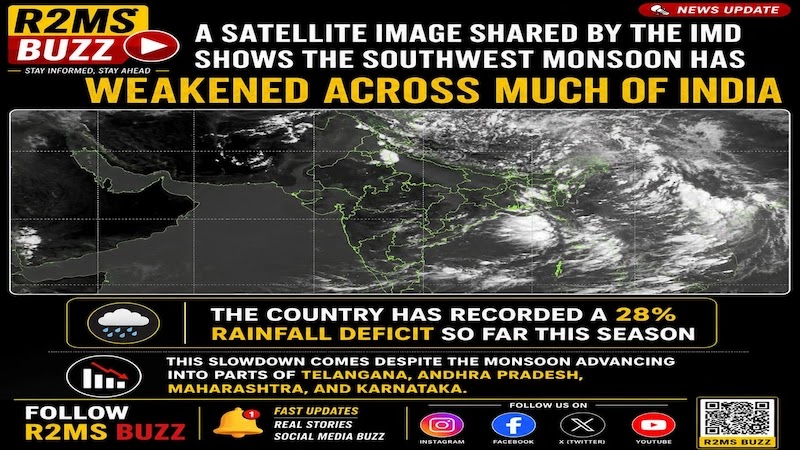
Southwest Monsoon Weakens Across India: IMD Satellite Images Show Rainfall Deficit and Weather Concerns
Southwest Monsoon Weakens Across India: Rainfall Deficit Raises Concerns Over Weather Conditions
The southwest monsoon is one of the most important weather systems for India. Every year, millions of people wait for the arrival of monsoon rains because they directly influence agriculture, water resources, temperature conditions and the overall economy.

Recently, weather discussions increased after satellite observations indicated that the southwest monsoon has weakened across several parts of India. Reports of reduced rainfall activity and a rainfall deficit have raised concerns among farmers, citizens and weather experts.
Although monsoon patterns naturally experience active and weak phases, any long slowdown creates questions about water availability, crop planning and climate conditions.
Importance of the Southwest Monsoon in India
The southwest monsoon is often called the lifeline of India because a large percentage of the country’s annual rainfall comes during this season.
The monsoon usually supports:
- Agriculture and farming activities
- Drinking water supply
- Reservoir and lake levels
- Groundwater recharge
- Hydroelectric power generation
- Natural ecosystems
A healthy monsoon season plays a major role in maintaining balance across different sectors.
When rainfall reduces or becomes uneven, its impact can be felt across the country.
IMD Satellite Observations Show Monsoon Slowdown
Weather monitoring agencies use advanced satellite technology to observe cloud movement, rainfall systems and atmospheric conditions.
Satellite images help experts track:
- Cloud formation
- Rain-bearing systems
- Monsoon movement
- Storm development
- Weather changes
Recent observations suggested weaker monsoon activity in several areas, creating concern about rainfall distribution.
A slowdown does not mean the monsoon has completely stopped. Monsoon seasons often include periods of strong rainfall followed by weaker phases.
Rainfall Deficit Creates Concern
A rainfall deficit happens when an area receives less rain than expected during a particular period.
Lower rainfall can affect:
Agriculture
Farmers depend heavily on monsoon rains, especially in regions where irrigation facilities are limited.
Delayed or weak rainfall can impact:
- Crop sowing schedules
- Soil moisture levels
- Agricultural production
Water Storage
Reservoirs, lakes and dams require sufficient rainfall to maintain water supply.
Low rainfall can create pressure on:
- Drinking water systems
- Irrigation projects
- Urban water supply
Temperature Conditions
Rainfall helps reduce extreme heat. Weak monsoon conditions may lead to warmer and uncomfortable weather.
Why Does the Monsoon Become Weak?
The Indian monsoon is influenced by several atmospheric and oceanic factors. Changes in these conditions can affect rainfall intensity.
Some possible reasons include:
1. Atmospheric Changes
Wind patterns and pressure systems control monsoon movement.
2. Ocean Conditions
Temperature changes in oceans influence rainfall patterns.
3. Climate Variability
Changing climate conditions can create unpredictable weather behavior.
4. Break Monsoon Phase
Sometimes monsoon enters a temporary weak phase before becoming active again.
Weather systems are complex, and experts continuously monitor changes before making forecasts.
States Monitoring Rainfall Situation
Monsoon activity varies from region to region. Some areas may receive heavy rainfall while others experience shortages during the same period.
States dependent on seasonal rainfall closely monitor:
- Rainfall levels
- Reservoir storage
- Agricultural conditions
- Weather forecasts
Timely weather information helps governments and farmers make better decisions.
Impact on Farmers
Farmers are among the most affected groups when rainfall patterns change.
The agricultural sector depends on predictable weather conditions. A delay or shortage of rainfall can increase challenges.
Farmers may face issues such as:
- Delayed planting
- Reduced soil moisture
- Increased irrigation needs
- Crop stress
Modern forecasting and improved irrigation systems can help reduce some risks.
Urban Areas and Water Management
Weak monsoon conditions are not only an agricultural concern. Cities also depend on rainfall to maintain water resources.
Large cities require huge amounts of water every day for:
- Homes
- Industries
- Businesses
- Public services
If rainfall remains low for a longer period, careful water management becomes necessary.
Citizens can support conservation by:
- Reducing unnecessary water usage
- Fixing leaking taps
- Reusing water when possible
- Supporting rainwater harvesting
Small actions by millions of people can create a major impact.
Climate Change and Changing Rainfall Patterns
Weather experts around the world are studying how climate change affects rainfall behavior.
Many regions are experiencing:
- Irregular rainfall patterns
- Sudden heavy rain events
- Longer dry periods
- Temperature changes
This makes better planning and sustainable resource management more important than ever.
Role of Technology in Weather Forecasting
Modern technology has improved weather prediction significantly.
Today, meteorologists use:
- Satellites
- Weather radars
- Computer models
- Artificial intelligence systems
These tools help provide early warnings and better information to the public.
Accurate forecasts allow farmers, governments and citizens to prepare for changing conditions.
What Happens Next?
A temporary slowdown in monsoon activity does not necessarily mean the entire season will be weak.
Monsoon systems can strengthen again when favorable conditions return.
Weather agencies continue monitoring:
- Rainfall movement
- Cloud systems
- Ocean patterns
- Wind conditions
Regular updates help people understand upcoming weather possibilities.
Need for Water Conservation
Whether rainfall is normal or below average, saving water remains important.
Useful water-saving habits include:
- Using water responsibly
- Collecting rainwater
- Avoiding wastage
- Protecting natural water sources
Water conservation helps communities become stronger against uncertain weather patterns.
Conclusion
The reports of a weakening southwest monsoon and rainfall deficit across parts of India highlight the importance of weather awareness and sustainable planning.
The monsoon remains a powerful natural system that supports millions of lives. While temporary changes are normal, responsible management of water and resources is essential.
With improved technology, better forecasting and public awareness, India can manage weather challenges more effectively.
A strong future depends on respecting nature and using resources wisely.