
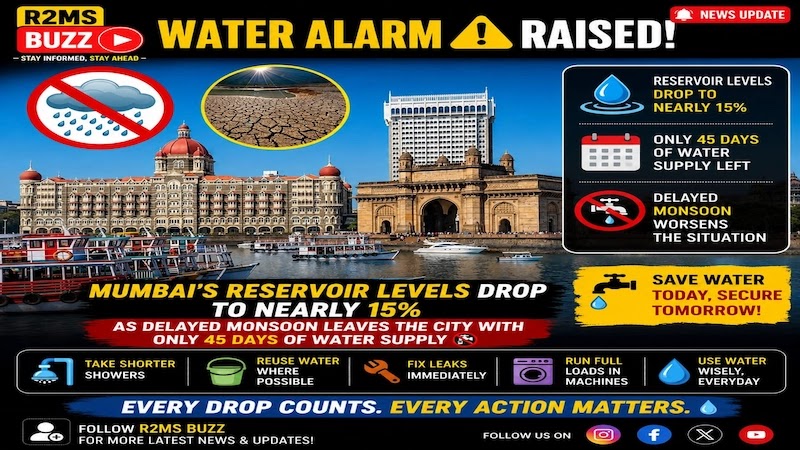
Mumbai Water Crisis Alert
Mumbai Water Crisis Alert: Falling Reservoir Levels Raise Concerns as Delayed Monsoon Impacts Water Supply
Water is one of the most important resources for human life, but growing demand, climate changes and unpredictable weather patterns are creating challenges for many cities. Recently, concerns have increased in Mumbai after reports indicated a significant drop in reservoir water levels due to delayed monsoon conditions.
.webp "Mumbai Water Crisis Alert")
Mumbai, India’s financial capital and home to millions of people, depends heavily on seasonal rainfall to maintain its water supply. When rainfall arrives late or remains below expectations, reservoirs face pressure, creating concerns about future availability.
The situation has once again highlighted the importance of responsible water usage, conservation and long-term planning.
Why Are Mumbai’s Reservoir Levels Dropping?
Mumbai receives a large portion of its water from lakes and reservoirs that depend mainly on monsoon rainfall. Every year, the rainy season refills these water sources and ensures enough supply for residents throughout the year.
However, when monsoon activity is delayed, water storage begins to decline.
Several factors can contribute to falling reservoir levels:
- Delay in rainfall
- Increasing water demand
- High population pressure
- Rising temperatures
- Changing climate patterns
A combination of these factors can create a difficult situation for urban water management.
Importance of Monsoon for Mumbai
The monsoon season is extremely important for Mumbai. Apart from providing relief from summer heat, rainfall plays a major role in maintaining the city’s water resources.
Major reservoirs supplying water to Mumbai depend on consistent rainfall during the monsoon months.
A strong monsoon helps:
- Refill lakes
- Maintain drinking water supply
- Support agriculture
- Improve groundwater levels
- Reduce drought risks
When rainfall is delayed, authorities and citizens must use available resources carefully.
Impact of Water Shortage on Daily Life
Water shortage affects almost every part of daily life. In large cities like Mumbai, millions of people require water for drinking, cooking, cleaning and other essential needs.
A decline in water availability can impact:
Households
Families may need to manage water more carefully and avoid unnecessary usage.
Businesses
Industries and commercial activities depend on reliable water supply.
Public Services
Hospitals, schools and community services require continuous water availability.
Environment
Reduced water levels can affect natural ecosystems and surrounding areas.
This shows why water conservation is not only an individual responsibility but a community requirement.
Climate Change and Water Challenges
Across the world, cities are experiencing unusual weather patterns. Scientists have repeatedly highlighted that climate changes can affect rainfall timing and intensity.
Some areas experience excessive rainfall and flooding, while others face water shortages.
Urban areas face additional challenges because of:
- Rapid population growth
- Increased construction
- Higher consumption
- Pressure on natural resources
Sustainable planning is necessary to manage future water needs.
Role of Citizens During Water Shortage
Every person can contribute to saving water. Small daily actions by millions of citizens can create a huge difference.
Some simple water-saving habits include:
1. Take Shorter Showers
Reducing shower time helps save several litres of water every day.
2. Repair Water Leaks Quickly
A small leaking tap can waste a large amount of water over time.
3. Reuse Water When Possible
Water from certain household activities can be reused for cleaning or gardening.
4. Use Appliances Efficiently
Running washing machines with full loads helps reduce water waste.
5. Turn Off Taps
Avoid leaving taps running while brushing teeth or washing items.
Every drop saved contributes to protecting future resources.
Government and Water Management Measures
Managing water supply in a large city requires strong planning. Authorities regularly monitor reservoir levels and take necessary steps depending on the situation.
Possible measures include:
- Water conservation campaigns
- Leakage control programs
- Infrastructure improvement
- Rainwater harvesting promotion
- Public awareness drives
Long-term solutions require cooperation between government bodies and citizens.
Importance of Rainwater Harvesting
Rainwater harvesting is one of the most effective methods to improve water security.
Instead of allowing rainwater to flow away, collection systems store it for future use.
Benefits include:
- Increasing groundwater levels
- Reducing dependency on reservoirs
- Supporting sustainable living
- Preventing water wastage
Large cities can benefit greatly by adopting more rainwater conservation practices.
Learning From Water Crisis Situations
Water shortage warnings remind society about the value of natural resources. Many people realize the importance of conservation only when supply becomes limited.
The key lesson is simple:
Water should be saved before a crisis begins.
Responsible usage throughout the year can reduce pressure during difficult periods.
Future of Urban Water Security
As cities continue expanding, water management will become one of the biggest challenges of the future.
Solutions may include:
- Smart water monitoring systems
- Better recycling technology
- Improved storage facilities
- Sustainable city planning
- Greater public awareness
Protecting water resources today will help future generations live safely.
Every Drop Counts: A Shared Responsibility
Water conservation is not only the responsibility of governments or organizations. Every individual plays an important role.
Simple lifestyle changes can create a powerful impact when practiced by millions.
Saving water means protecting:
- Families
- Communities
- Environment
- Future generations
A responsible approach today can prevent bigger problems tomorrow.
Conclusion
The concerns over Mumbai’s falling reservoir levels due to delayed monsoon conditions serve as an important reminder about the value of water conservation.
While rainfall patterns cannot be controlled, responsible usage and better planning can reduce the impact of water shortages.
Water is limited, precious and essential for survival. Every citizen must understand that saving even a small amount of water matters.
Because when it comes to protecting the future — every drop counts, and every action matters.