
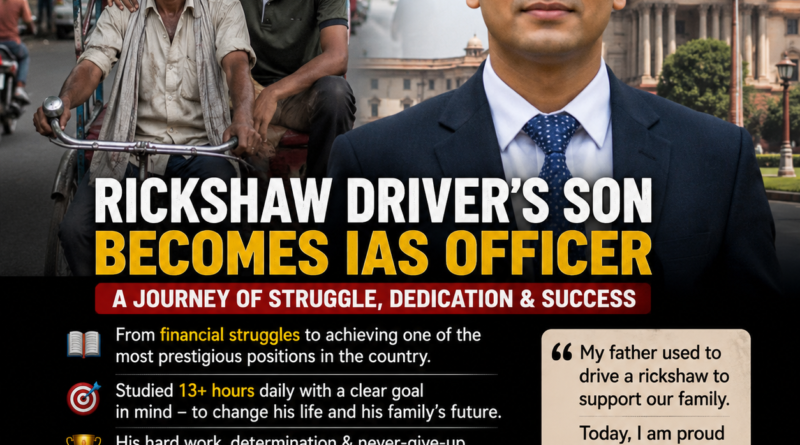
Rickshaw Driver’s Son Becomes One of India’s Youngest IAS Officers
Rickshaw Driver’s Son Becomes One of India’s Youngest IAS Officers: A Story of Determination, Hard Work and Hope
Every year, thousands of young Indians dream of clearing the Civil Services Examination conducted by the Union Public Service Commission (UPSC). It is widely regarded as one of the toughest competitive examinations in the country, demanding years of preparation, discipline, patience, and unwavering determination. While many aspirants come from privileged backgrounds with access to coaching institutes and study resources, some achieve success despite facing significant financial hardships.
One such inspiring story that has captured the attention of people across the country is that of a rickshaw driver’s son who became one of India’s youngest IAS officers. His remarkable journey from a modest family to one of the most respected positions in the Indian administrative system has become a symbol of perseverance and hope for millions of students.
According to widely circulated reports and interviews, the young officer once shared that he studied nearly 13 hours every day because he could not afford to fail. Unlike many candidates who have the option of multiple attempts supported by financial stability, he believed that failure would mean losing an opportunity that his family had sacrificed everything to provide.
His inspiring words have resonated with students across India, reminding everyone that determination, discipline, and consistency often matter more than circumstances.
A Humble Beginning
Growing up in a financially struggling household is never easy. For many families, every rupee earned goes toward meeting daily needs such as food, rent, education, and healthcare. Pursuing higher education under such conditions often requires extraordinary sacrifices from parents.
The young IAS officer’s father reportedly worked as a rickshaw driver, spending long hours every day to support the family. Driving a rickshaw is physically demanding work, involving long hours under harsh weather conditions while earning only a modest daily income.
Despite these financial limitations, his parents believed that education was the most valuable investment they could make for their son’s future. Instead of allowing economic hardship to become an obstacle, they encouraged him to continue studying and pursue his dreams.
Their faith became one of the strongest foundations of his success.
The Dream of Becoming an IAS Officer
For countless students across India, becoming an Indian Administrative Service (IAS) officer represents much more than securing a prestigious government job. It offers an opportunity to contribute to public administration, implement development programs, improve governance, and positively impact society.
However, the path to becoming an IAS officer is extremely challenging.
The UPSC Civil Services Examination tests candidates through multiple stages:
- Preliminary Examination
- Main Examination
- Personality Test (Interview)
Candidates are expected to demonstrate strong knowledge of history, geography, economics, polity, science, ethics, current affairs, and analytical thinking.
Only a small percentage of aspirants successfully clear all stages each year.
“I Could Not Afford to Fail”
Perhaps the most powerful aspect of his journey is the statement that has inspired millions:
“I studied 13 hours a day because I couldn’t afford to fail. I didn’t have the resources for a second attempt.”
These words reflect not only determination but also the realities faced by many students from economically weaker backgrounds.
Unlike aspirants who can comfortably prepare for multiple attempts, some candidates know they have only one realistic opportunity. Financial responsibilities, family expectations, and limited resources create additional pressure that often goes unnoticed.
Instead of allowing this pressure to discourage him, he converted it into motivation.
Discipline Over Shortcuts
Success in competitive examinations rarely comes from last-minute preparation. It requires disciplined daily effort over months or even years.
Reports suggest that the young officer followed a structured routine focused on:
- Long study hours
- Regular revision
- Current affairs
- Mock tests
- Answer writing practice
- Self-discipline
His preparation was not built on shortcuts but on consistency.
Many education experts agree that disciplined study habits often contribute more to success than studying for extremely long hours on a few occasions.
The Sacrifices Behind Every Success
Whenever stories like these become popular, people often celebrate the final achievement. However, behind every successful candidate lies a family that quietly made countless sacrifices.
Parents frequently postpone their own needs to invest in their children’s education.
They may work longer hours, reduce household expenses, or borrow money to purchase books, pay examination fees, or support coaching if possible.
For families with limited incomes, every educational opportunity represents a collective investment.
The success of one child often reflects the efforts of the entire family.
Why Such Stories Inspire India
India has always celebrated stories where determination triumphs over adversity.
Young people identify with such journeys because they demonstrate that difficult circumstances do not permanently define one’s future.
While every individual follows a unique path, stories like these encourage students to:
- Believe in themselves.
- Stay consistent.
- Value education.
- Respect their parents’ sacrifices.
- Remain focused despite challenges.
They remind us that genuine success is built gradually through patience and continuous improvement.
Education as a Powerful Equalizer
Education remains one of the most effective tools for social mobility.
Regardless of economic background, quality education enables individuals to develop knowledge, confidence, skills, and opportunities that can transform entire families.
Government scholarships, public libraries, affordable digital learning platforms, and online educational resources have made quality learning more accessible than ever before.
Students from smaller towns and villages are increasingly proving that dedication can overcome geographical and financial limitations.
Lessons for UPSC Aspirants
Every UPSC journey is different, but several valuable lessons emerge from inspiring success stories like this:
Set Clear Goals
Having a clear purpose helps maintain motivation during difficult phases of preparation.
Build a Daily Routine
Consistency is more important than occasional bursts of hard work.
Stay Patient
Preparing for competitive examinations requires emotional resilience and long-term commitment.
Learn From Mistakes
Regular practice tests and answer writing help identify weaknesses before the actual examination.
Maintain Physical and Mental Health
Adequate sleep, exercise, and balanced nutrition improve concentration and productivity during long preparation periods.
Success Beyond the Examination
Becoming an IAS officer is not merely about clearing an examination. It also brings significant responsibility.
IAS officers play important roles in:
- District administration
- Public welfare
- Policy implementation
- Disaster management
- Rural development
- Education
- Healthcare
- Infrastructure planning
The position offers an opportunity to serve millions of citizens and contribute to nation-building.
For many aspirants, this sense of public service becomes an even greater motivation than the prestige associated with the role.
A Message for Students
The story of a rickshaw driver’s son becoming one of India’s youngest IAS officers reminds students that success is rarely determined by financial status alone.
Every journey is unique. Some students may have better resources, while others rely primarily on determination and disciplined effort.
Rather than comparing themselves with others, students should focus on steady improvement, realistic planning, and continuous learning.
Even small daily progress eventually creates extraordinary results.
Conclusion
The inspiring journey of a rickshaw driver’s son becoming one of India’s youngest IAS officers is a powerful reminder that determination, discipline, and family support can overcome even the most difficult circumstances. His statement about studying 13 hours a day because he could not afford to fail reflects the reality faced by many talented students who pursue their dreams despite financial hardships.
While success stories often highlight the final achievement, they also represent years of sacrifice, perseverance, and unwavering commitment. For aspiring civil servants and students across the country, this journey serves as proof that education remains one of the strongest tools for transforming lives.
His achievement is not only a personal victory but also a tribute to every hardworking parent who believes that education can change the future of their children. It stands as an inspiration for millions of young Indians to continue working toward their goals with honesty, patience, and determination.