
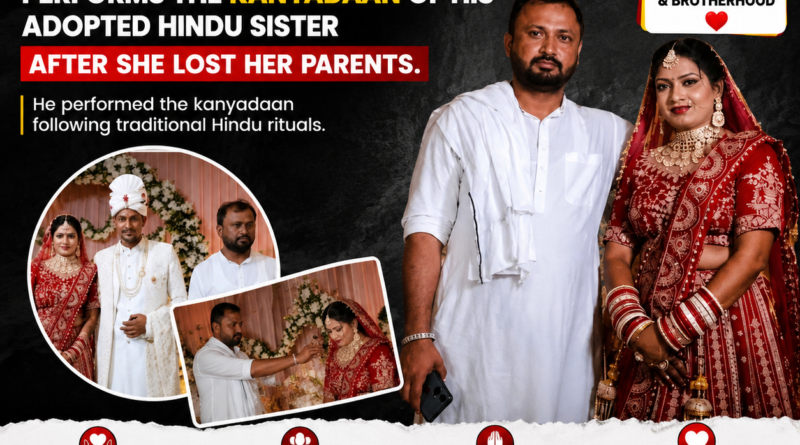
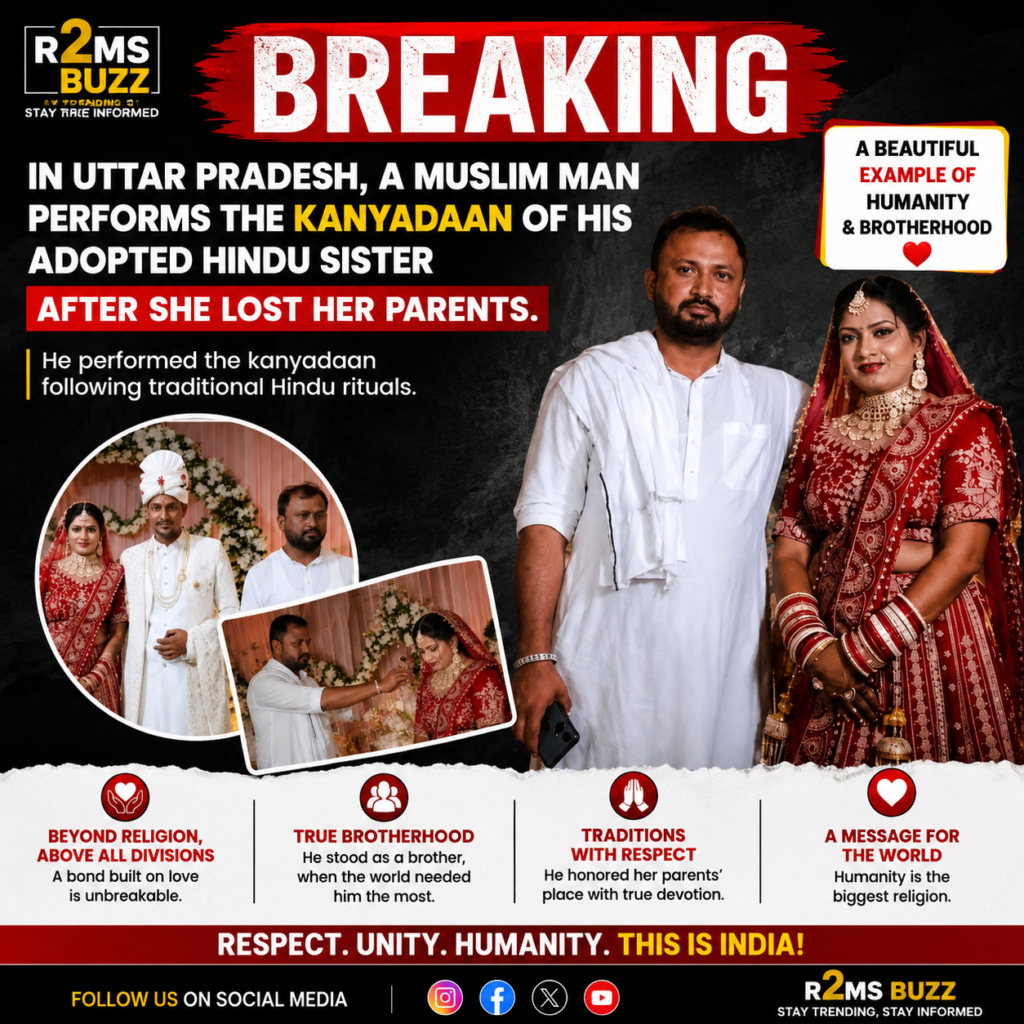
Muslim Man Performs Kanyadaan of His Adopted Hindu Sister in Uttar Pradesh, Inspiring a Powerful Message of Humanity and Unity
Humanity Triumphs Over Religious Differences in Uttar Pradesh
In a time when headlines are often dominated by stories of conflict and division, a touching incident from Uttar Pradesh has reminded the nation that compassion, humanity, and love continue to unite people across religious boundaries. A Muslim man performed the traditional Hindu ritual of kanyadaan for his adopted Hindu sister after she lost both her parents, earning admiration from people across the country.
The emotional gesture has become a symbol of communal harmony, demonstrating that relationships built on trust, respect, and affection can rise above differences in religion or background. The story has gone viral on social media, with thousands praising the man for standing beside his sister during one of the most important moments of her life.
The incident is being celebrated as a beautiful example of India’s long-standing tradition of unity in diversity, where different communities often come together to support one another in times of joy and hardship.
A Brother’s Promise Fulfilled
According to reports, the woman had lost both her parents before her marriage. With no father to perform the sacred Hindu ritual of kanyadaan, her adopted Muslim brother stepped forward to fulfil the responsibility.
Rather than allowing the absence of her parents to overshadow her wedding day, he chose to honour their memory by ensuring every important ritual was completed according to Hindu traditions. Family members, relatives, and guests witnessed an emotional ceremony where he performed the rituals with sincerity and respect.
The touching moment reflected not only his affection for his adopted sister but also his deep respect for her faith and traditions.
Understanding the Significance of Kanyadaan
In Hindu weddings, kanyadaan is considered one of the most sacred ceremonies. Traditionally performed by the bride’s parents, especially her father, it symbolizes the blessing and formal giving away of the bride to begin a new chapter of her life with her husband.
The ritual carries emotional, cultural, and spiritual significance for many Hindu families. When the woman’s adopted Muslim brother performed the ceremony, it was viewed as an act of love rather than merely a religious ritual.
Observers noted that his decision reflected a powerful understanding that compassion and family responsibilities transcend religious identities.
Respecting Faith While Strengthening Relationships
One of the most remarkable aspects of the incident was the respect shown for religious customs. Instead of altering the traditions, the adopted brother ensured that the wedding followed Hindu rituals as desired by his sister and her family.
His actions highlighted an important message: respecting another person’s faith does not diminish one’s own beliefs. Instead, mutual respect strengthens relationships and promotes social harmony.
Many social commentators have described the event as an example of India’s pluralistic culture, where people from different backgrounds often participate in each other’s celebrations with dignity and goodwill.
Social Media Celebrates the Gesture
Photographs and videos from the wedding quickly spread across social media platforms, where users praised the man’s compassionate decision.
Thousands of comments described the story as:
- A true example of humanity.
- A symbol of communal harmony.
- A reminder that love is stronger than hatred.
- A reflection of India’s cultural diversity.
- An inspiring lesson in brotherhood.
Many users noted that positive stories such as this deserve equal attention because they inspire hope and encourage unity within society.
Family Bonds Beyond Blood Relations
The story also highlights the importance of relationships that are built through care rather than biology.
Across India, many families include adopted children, foster siblings, close family friends, and individuals who become part of the family through years of affection and mutual support. These relationships often become just as meaningful as those based on blood ties.
By performing kanyadaan, the adopted brother reaffirmed that family responsibilities are defined by commitment, not merely by birth.
His gesture reflected the belief that standing beside loved ones during life’s most important moments is one of the greatest expressions of family.
India’s Tradition of Unity in Diversity
India has long been recognized for its rich cultural and religious diversity. People belonging to different communities have shared traditions, festivals, neighbourhoods, and workplaces for generations.
While differences occasionally receive greater public attention, countless stories of cooperation and friendship occur quietly across the country every day.
This wedding became one such example where religious identity did not create barriers. Instead, it strengthened the values of mutual respect and coexistence.
Experts often describe India’s social fabric as being built upon everyday acts of understanding, cooperation, and shared humanity.
Why This Story Resonates with People
The widespread appreciation for this incident reflects a growing desire among people to celebrate positive examples of social harmony.
At a time when divisive narratives frequently dominate public discussions, stories emphasizing kindness and unity offer a refreshing perspective.
The emotional nature of the wedding, combined with the loss experienced by the bride, made the adopted brother’s gesture even more meaningful. His willingness to assume parental responsibilities during the ceremony touched the hearts of many who viewed the event online.
For many Indians, the story reinforces the belief that humanity should remain above prejudice.
The Importance of Interfaith Respect
India’s Constitution guarantees every citizen the freedom to practice, profess, and propagate their religion while respecting the rights of others.
Acts of interfaith cooperation contribute significantly to strengthening social trust and reducing misunderstanding between communities.
Whether participating in festivals, supporting neighbours during emergencies, or standing beside friends during important family occasions, such gestures demonstrate that respect for diversity enriches society rather than weakening it.
The Uttar Pradesh wedding serves as a reminder that compassion often becomes the strongest bridge between different communities.
Lessons for Society
The incident offers several meaningful lessons:
Humanity Comes First: Compassion and empathy are values shared across all religions and cultures.
Family Is Built on Love: Relationships based on care and responsibility can be as strong as biological ties.
Respect Strengthens Communities: Honouring another person’s traditions promotes harmony rather than division.
Positive Stories Matter: Stories of kindness inspire others and help build greater trust within society.
Unity Is India’s Greatest Strength: Diversity has always been one of India’s defining characteristics, and mutual respect remains essential for national progress.
Reactions from Local Residents
People who attended the wedding reportedly appreciated the respectful manner in which the ceremony was conducted.
Guests described the event as emotional and inspiring, noting that the adopted brother fulfilled his responsibility with sincerity and dignity. Many believed the ceremony represented not only a family celebration but also a broader message about social unity.
Residents expressed hope that such examples would encourage greater understanding among different communities.
Beyond Religion: A Story About Compassion
Although the incident involves individuals from different religious backgrounds, its central message is ultimately about compassion.
The adopted brother did not seek recognition or publicity. Instead, he simply ensured that his sister’s wedding remained complete despite the absence of her parents.
His decision reminds society that kindness often speaks louder than words and that genuine relationships are built through actions.
Conclusion
The heartwarming story from Uttar Pradesh has become much more than a wedding ceremony. It has evolved into a powerful reminder that love, responsibility, and humanity have the ability to rise above religious differences.
By performing the traditional Hindu ritual of kanyadaan for his adopted sister after the loss of her parents, the Muslim man demonstrated extraordinary compassion and respect. His actions have inspired countless people across India and reaffirmed the country’s enduring values of unity in diversity.
At a time when positive stories are needed more than ever, this remarkable gesture stands as an example of how mutual respect and human kindness can bring communities together. It reminds us that while faiths may differ, the values of love, family, and compassion remain universal.