AI in Education: How Artificial Intelligence Is Changing the Way Students Learn
Education has always changed with technology. From blackboards to smart classrooms and from printed books to online learning, every new invention has made learning easier. Today, Artificial Intelligence (AI) is becoming the next big change in education.
Students are using AI to understand difficult topics, teachers are saving time with AI-powered tools, and schools are exploring new ways to improve learning. AI is no longer just a technology for software companies—it has become a learning partner for millions of students around the world.
But while AI offers many benefits, it also raises important questions. Can students become too dependent on it? Will AI replace teachers? Or will it simply become another tool to improve education?
Let’s take a closer look.
What Is AI in Education?
AI in education means using artificial intelligence to support teaching and learning. AI systems can answer questions, explain topics, check grammar, create quizzes, summarize lessons, and even suggest personalized study plans.
Unlike traditional educational software, AI can understand questions written in natural language and provide responses that are tailored to the student’s needs.
This makes learning more flexible and interactive.
How Students Use AI Every Day
Many students already use AI without realizing it.
Some common examples include:
- Getting explanations for difficult subjects.
- Solving mathematics problems.
- Learning new languages.
- Improving grammar and writing.
- Creating study notes.
- Preparing for interviews and competitive exams.
- Practicing coding and programming.
Instead of searching through multiple websites, students can often receive clear explanations in one place.
AI Makes Learning More Personal
Every student learns differently.
Some understand quickly through reading, while others prefer videos, diagrams, or step-by-step explanations.
AI can adapt to different learning styles by providing explanations at different levels of difficulty. If a student doesn’t understand a topic the first time, AI can explain it again using simpler words or different examples.
This personalized approach helps many students learn at their own pace.
Helping Teachers Save Time
AI is not only useful for students.
Teachers can also benefit from AI in several ways.
It can help them:
- Prepare lesson plans.
- Create quizzes.
- Generate practice questions.
- Check grammar in assignments.
- Organize classroom materials.
- Prepare presentations.
By reducing repetitive tasks, teachers have more time to focus on teaching, mentoring, and interacting with students.
AI in Online Learning
Online education has grown rapidly in recent years.
Many learning platforms now use AI to:
- Recommend courses.
- Track student progress.
- Suggest revision topics.
- Identify weak areas.
- Provide instant feedback.
This helps students understand where they need improvement instead of guessing what to study next.
AI Helps Students with Disabilities
One of AI’s most valuable contributions is making education more accessible.
AI-powered tools can:
- Convert speech into text.
- Read text aloud.
- Translate languages.
- Generate subtitles for videos.
- Help visually impaired students access learning materials.
These technologies help create a more inclusive learning environment.
Challenges of AI in Education
Although AI offers many benefits, it also comes with challenges.
Overdependence on AI
Some students may rely too much on AI instead of thinking independently. Learning is not just about getting answers—it is about understanding concepts and developing problem-solving skills.
Incorrect Information
AI can sometimes make mistakes or provide incomplete information. Students should always verify important facts using reliable sources or consult their teachers.
Academic Integrity
Using AI to complete assignments without understanding the material can affect genuine learning. Schools and colleges are increasingly encouraging students to use AI as a learning aid rather than as a shortcut.
Privacy Concerns
Many AI tools require users to share information. Educational institutions should ensure that student data is handled responsibly and securely.
Will AI Replace Teachers?
This is one of the most common questions.
The answer is no.
AI can explain concepts, generate exercises, and answer questions quickly, but it cannot replace the guidance, encouragement, experience, and emotional support that teachers provide.
Teachers inspire students, understand classroom dynamics, motivate learners, and help develop critical thinking. These are uniquely human qualities.
AI works best when it supports teachers, not replaces them.
The Future of AI in Education
The role of AI in education is expected to grow in the coming years.
Future developments may include:
- More personalized learning experiences.
- Smarter virtual tutors.
- Better language translation for international students.
- Faster assessment tools.
- Improved accessibility for learners with disabilities.
- AI-assisted career guidance.
As these technologies evolve, students and teachers will need to learn how to use them responsibly.
How Students Can Use AI Wisely
AI is a powerful tool, but it should be used carefully.
Here are a few practical tips:
- Use AI to understand concepts, not just copy answers.
- Double-check important facts with trusted sources.
- Practice solving questions without AI as well.
- Respect your school’s academic integrity rules.
- Build your own thinking and problem-solving skills.
Using AI as a study partner rather than a replacement for learning can help students gain the greatest benefit.
Frequently Asked Questions
What is AI in education?
AI in education refers to the use of artificial intelligence to support teaching, learning, assessment, and student engagement.
Can AI replace teachers?
No. AI can assist teachers by automating tasks and providing learning support, but it cannot replace human teaching, mentorship, or emotional understanding.
Is AI good for students?
Yes, when used responsibly. AI can help students understand concepts, practice skills, and organize their studies. However, students should avoid relying on it for every answer.
What are the biggest benefits of AI in education?
The main benefits include personalized learning, faster feedback, improved accessibility, better study support, and reduced administrative work for teachers.
Internal Linking Suggestions
- AI in Daily Life
- AI vs Human
- Can AI Replace IT Jobs?
- Best AI Tools for Students
- Future of Artificial Intelligence
Image Placement Suggestions
Featured Image
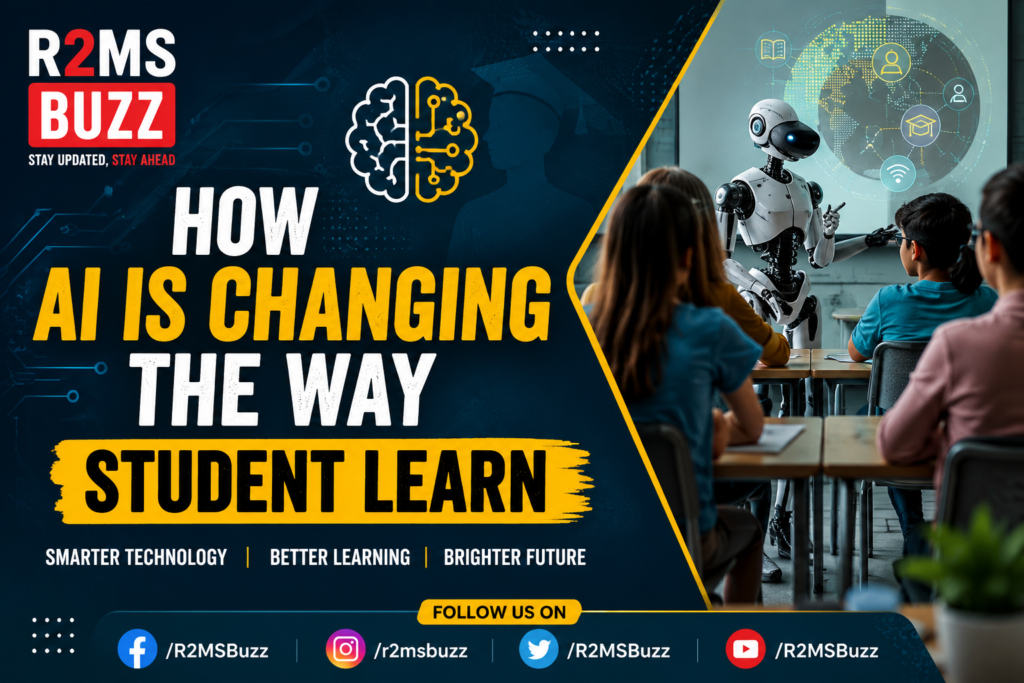
- Alt Text: Students using AI for learning
- Caption: Artificial intelligence is becoming a valuable learning tool in modern education.
Mid-Article
- Alt Text: Teacher using AI in the classroom
- Caption: AI helps teachers prepare lessons and personalize learning.
Before Conclusion
- Alt Text: AI and education technology
- Caption: The future of education is expected to combine technology with human teaching.
Recommended Schema
- Article
- FAQPage
- BreadcrumbList
Conclusion
Artificial Intelligence is changing education by making learning more accessible, interactive, and personalized. It helps students understand difficult topics, supports teachers with routine tasks, and opens new opportunities for schools to improve learning experiences.
However, AI should not replace curiosity, critical thinking, or the guidance of teachers. The most effective approach is to use AI as a learning assistant while continuing to build knowledge through practice, discussion, and independent thinking.
The future of education is unlikely to be driven by AI alone. Instead, it will be shaped by students, teachers, and technology working together to create better learning experiences for everyone.
Also See Related article Best AI Tools in 2026: 20 Powerful AI Tools That Can Save Time and Boost Productivity, Can AI Take Over Jobs in the IT Sector? The Truth Every Tech Professional Should Know, AI in Daily Life: How Artificial Intelligence Is Making Our Everyday Life Easier