
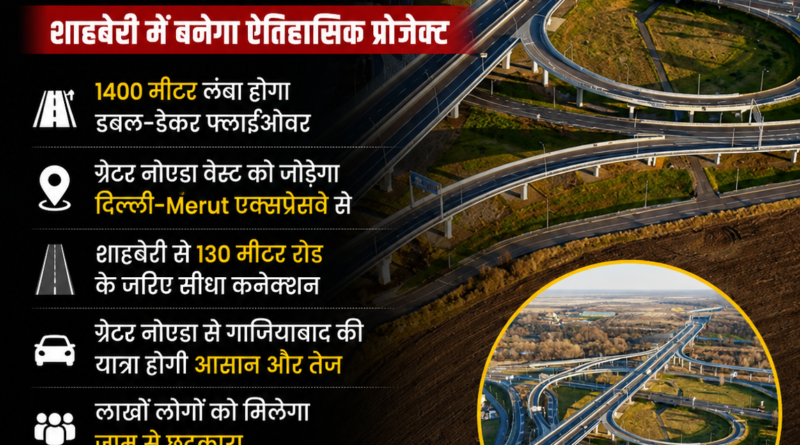
UP’s First Double-Decker Flyover in Greater Noida
Greater Noida West is set to witness a major infrastructure milestone with the construction of Uttar Pradesh’s first-ever double-decker flyover. The ambitious project, planned in the rapidly developing Shahberi area, is expected to significantly improve connectivity between Greater Noida West, Ghaziabad, and Delhi while easing one of the region’s biggest challenges—traffic congestion.
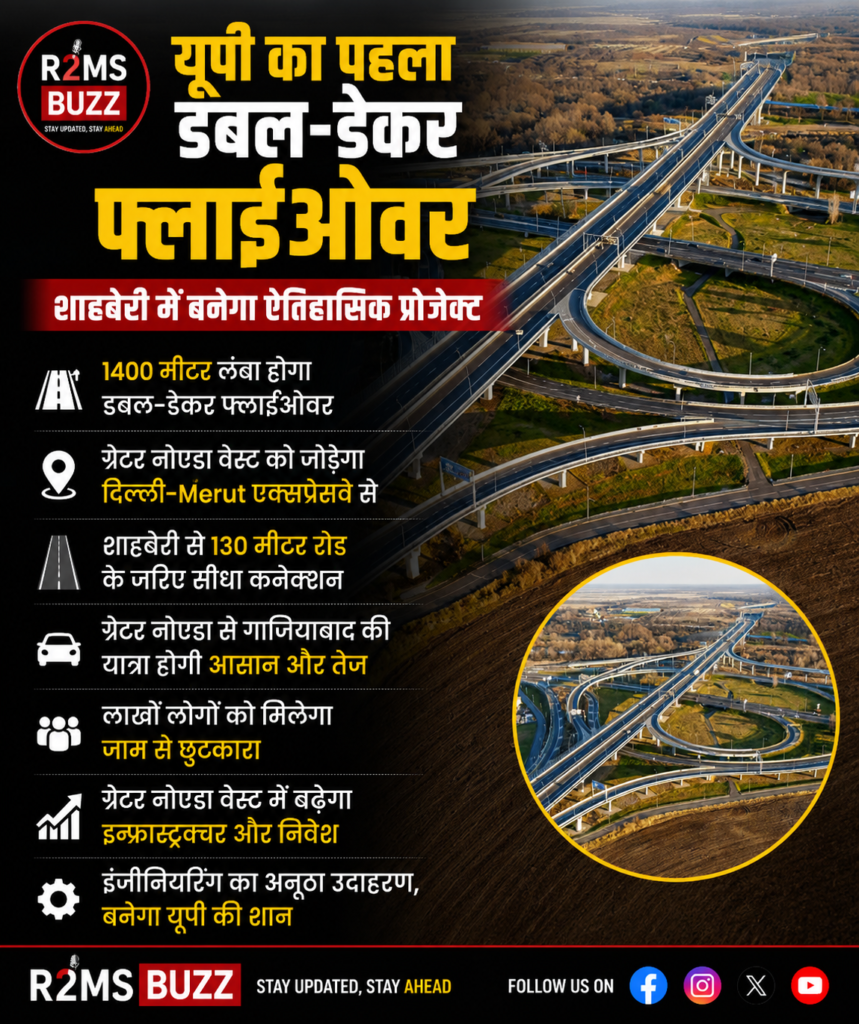
The proposed flyover, stretching approximately 1,400 metres, will provide a direct link between Greater Noida West and the Delhi-Meerut Expressway. Officials believe the project will not only reduce travel time for lakhs of daily commuters but also strengthen the region’s transportation network and support long-term urban development.
Developed by the Greater Noida Authority, the project reflects the government’s continued focus on expanding modern road infrastructure in the National Capital Region (NCR). Once completed, it will become an engineering landmark as the first double-decker flyover in Uttar Pradesh.
A Landmark Infrastructure Project for Uttar Pradesh
The proposed flyover is expected to become one of the state’s most significant road infrastructure projects in recent years.
Unlike conventional flyovers, a double-decker design allows traffic to move on two separate elevated levels, improving road capacity without requiring a much wider land footprint. Such structures are generally developed in densely populated urban areas where expanding roads at ground level is difficult.
With Shahberi witnessing rapid residential and commercial growth, the need for an efficient traffic solution has become increasingly urgent.
Officials believe the project will help meet the transportation demands of one of NCR’s fastest-growing urban corridors.
Direct Connectivity to Delhi-Meerut Expressway
One of the biggest advantages of the proposed flyover is its direct connection to the Delhi-Meerut Expressway, one of northern India’s most important expressway corridors.
At present, commuters travelling from Greater Noida West often experience delays while navigating congested internal roads before reaching major highways.
The new flyover is designed to provide a smoother route, allowing vehicles to access the expressway with fewer interruptions.
This improved connectivity is expected to benefit thousands of people who travel daily between:
- Greater Noida West
- Ghaziabad
- Noida
- East Delhi
- Central Delhi
For many office-goers, students, business owners and commercial transport operators, the project could substantially reduce travel time.
Route Through the 130-Metre Road
According to the proposed plan, the double-decker flyover will pass through the 130-metre-wide road via Shahberi.
This corridor already serves as one of the busiest traffic routes connecting several residential sectors with major highways.
However, increasing vehicle numbers have resulted in frequent congestion, particularly during morning and evening peak hours.
By introducing an elevated traffic corridor, planners expect to separate through traffic from local traffic, improving overall traffic flow.
The project is expected to reduce pressure on existing intersections and minimise traffic bottlenecks.
Relief for Daily Commuters
For residents of Greater Noida West, daily commuting has become increasingly challenging over the past few years.
Rapid urban development has attracted thousands of families to the region, leading to a significant rise in vehicle movement.
Areas including Shahberi, Crossing Republik, Gaur City, Noida Extension and nearby localities often experience heavy traffic during office hours.
The new flyover is expected to bring much-needed relief by providing a faster and more direct route.
Officials estimate that lakhs of commuters travelling between Greater Noida, Noida and Ghaziabad will benefit once the project becomes operational.
Reduced congestion could also improve travel reliability for emergency services, school transport and public buses.
Greater Noida Authority Leading the Project
The project is being developed by the Greater Noida Authority, which has undertaken several infrastructure initiatives aimed at improving mobility across the city.
The authority has consistently focused on expanding road networks, improving public infrastructure and supporting planned urban development.
The proposed double-decker flyover represents another major step in that broader strategy.
Officials are expected to oversee planning, engineering, land-related requirements and construction through different phases of the project.
Further technical details regarding timelines and execution are expected as planning progresses.
Boost for Real Estate Development
Infrastructure projects often have a direct impact on surrounding property markets.
Real estate experts believe the proposed flyover could further strengthen Greater Noida West’s appeal among homebuyers and investors.
Improved connectivity generally increases accessibility, making residential and commercial projects more attractive.
Greater Noida West has already emerged as one of the fastest-growing housing markets in the NCR due to comparatively affordable property prices and expanding infrastructure.
The new flyover may encourage additional investment in:
- Residential townships
- Commercial complexes
- Retail developments
- Office spaces
- Hospitality projects
Developers believe better transportation networks improve long-term property value.
Economic Benefits Beyond Transportation
The project is expected to generate benefits beyond reducing traffic congestion.
Improved road infrastructure can help lower travel costs for businesses, improve logistics efficiency and encourage commercial activity.
Faster transportation also supports local employment by making industrial and commercial zones more accessible.
Retail businesses located along improved road corridors often experience increased customer movement due to better connectivity.
Infrastructure development also contributes to overall urban competitiveness by attracting investment and supporting future expansion.
Engineering Significance
Double-decker flyovers remain relatively uncommon because they require sophisticated engineering, detailed traffic planning and careful structural design.
The proposed Shahberi project is expected to become Uttar Pradesh’s first double-decker flyover, making it an important engineering milestone for the state.
Such structures are designed to maximise available urban space while accommodating growing traffic demand.
Successful implementation could encourage similar projects in other rapidly developing cities across Uttar Pradesh.
Urban planners increasingly view multi-level transportation infrastructure as an effective solution in areas where road widening is difficult.
Addressing Shahberi’s Traffic Challenges
Shahberi has experienced remarkable population growth over the last decade.
Large-scale residential development has significantly increased the number of private vehicles using local roads every day.
Traffic congestion has become a common concern for residents, particularly during peak commuting hours.
The proposed flyover aims to address these challenges by creating a dedicated elevated corridor for through traffic.
Reducing congestion at ground level could improve traffic movement not only for cars but also for local buses, emergency vehicles and commercial transport.
Supporting Future Urban Growth
Greater Noida West continues to expand rapidly, with new residential projects, educational institutions, healthcare facilities and commercial developments being added every year.
Transportation infrastructure plays a crucial role in supporting such growth.
Without adequate road capacity, increasing traffic volumes can affect productivity, quality of life and economic activity.
Projects like the proposed double-decker flyover are intended to ensure that infrastructure keeps pace with urban expansion.
Officials believe such investments are essential for creating sustainable and well-connected cities.
What Residents Can Expect
Although construction timelines and implementation schedules will be announced separately, residents can expect the project to bring long-term improvements in daily travel.
Potential benefits include:
- Reduced travel time
- Better connectivity with major highways
- Smoother traffic movement
- Improved access to Ghaziabad and Delhi
- Increased road safety through better traffic management
- Stronger infrastructure supporting future growth
While temporary traffic diversions may occur during construction, authorities generally aim to minimise inconvenience through phased execution.
Looking Ahead
Once completed, the Shahberi double-decker flyover is expected to become one of the defining infrastructure projects of Greater Noida West.
Its success could influence future transportation planning across Uttar Pradesh, particularly in rapidly urbanising districts facing similar traffic challenges.
Urban experts believe integrated infrastructure projects combining flyovers, expressways and wider road networks are essential for meeting the transportation needs of growing metropolitan regions.
Conclusion
The proposed 1.4-kilometre double-decker flyover in Shahberi represents far more than a new road project—it reflects the changing face of Greater Noida West as one of the NCR’s fastest-growing urban centres. By directly connecting the region to the Delhi-Meerut Expressway, reducing congestion and improving mobility, the project promises to make daily commuting easier for lakhs of residents.
Beyond transportation, the flyover is expected to stimulate economic activity, strengthen real estate development and establish a new engineering benchmark as Uttar Pradesh’s first double-decker flyover. As planning moves forward, residents and businesses alike will be watching closely, hopeful that the project will deliver lasting improvements in connectivity and urban infrastructure.
Frequently Asked Questions (FAQs)
Where will Uttar Pradesh’s first double-decker flyover be built?
The flyover will be constructed in the Shahberi area of Greater Noida West.
How long will the flyover be?
The proposed structure will have a length of approximately 1,400 metres.
Which roads will it connect?
It will connect Greater Noida West directly to the Delhi-Meerut Expressway through the 130-metre-wide road via Shahberi.
Who is developing the project?
The project is being developed by the Greater Noida Authority.
How will commuters benefit?
The flyover is expected to reduce travel time, ease traffic congestion and improve connectivity between Greater Noida, Noida, Ghaziabad and Delhi