
Sonam Wangchuk’s refuse to End Fast
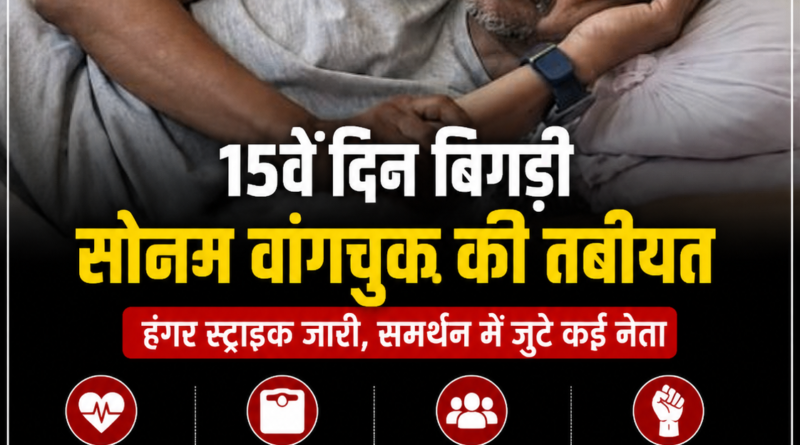
Social activist and education reform advocate Sonam Wangchuk has completed the 15th day of his indefinite hunger strike, with doctors reporting a noticeable decline in his health. As concerns over his medical condition grow, the larger protest demanding reforms in India’s examination system has continued to gather momentum at Jantar Mantar in New Delhi.
The demonstration, organized by the Cockroach Janta Party (CJP), entered its 23rd day, attracting support from political leaders, students, education activists, and civil society groups from across the country. Protesters are demanding greater transparency, accountability, and structural reforms in the examination process following repeated allegations of question paper leaks in competitive examinations.
The movement has become one of the most talked-about public campaigns on education in recent weeks, with Wangchuk urging citizens to actively participate in democratic processes rather than relying solely on public figures to bring change.
Doctors Report About Health
Medical professionals monitoring Sonam Wangchuk’s condition have expressed concern over the impact of his prolonged fast.
According to doctors, Wangchuk’s blood pressure dropped to 104/66 mm Hg, while he has reportedly lost nearly 7.8 kilograms since beginning his indefinite hunger strike.
Health experts note that extended fasting can lead to weakness, dehydration, electrolyte imbalance, muscle loss, and reduced blood pressure.
Doctors continue to conduct regular medical examinations while advising close monitoring of his condition.
Despite concerns raised by medical professionals, Wangchuk has continued the fast, stating that the movement represents a larger public cause concerning the future of India’s students.
Protest at Jantar Mantar Enters 23rd Day
The demonstration at Jantar Mantar has continued uninterrupted since June 20, making it one of the longest ongoing public protests focused on examination reforms in recent months.
The Cockroach Janta Party, which is leading the campaign, says the protest aims to draw national attention to repeated allegations of examination paper leaks and irregularities that have affected lakhs of students.
According to organizers, the movement seeks comprehensive reforms to restore public confidence in competitive examinations conducted across the country.
Participants continue gathering daily at the protest site despite changing weather conditions.
Sonam Wangchuk Joined the Protest Later
Although the protest began on June 20, Sonam Wangchuk joined the movement on June 28.
Since joining, he has remained on an indefinite hunger strike, saying the issue extends beyond individual examinations and concerns the credibility of India’s education system.
Known for his work in education, innovation, and sustainable development, Wangchuk’s participation significantly increased national attention toward the campaign.
Supporters believe his presence has helped amplify discussions surrounding examination reforms.
Demands for Greater Transparency
The primary demand of the protesters is greater accountability in the country’s examination system.
Organizers argue that repeated allegations of paper leaks have undermined public confidence in recruitment and entrance examinations.
According to protest leaders, students invest years preparing for highly competitive exams, making fairness and transparency essential.
The movement has called for:
- Stronger examination security systems
- Faster investigation of paper leak cases
- Greater institutional accountability
- Protection of students’ interests
- Long-term structural reforms
Protesters say these measures are necessary to restore trust in public examinations.
Demand for Education Minister’s Resignation
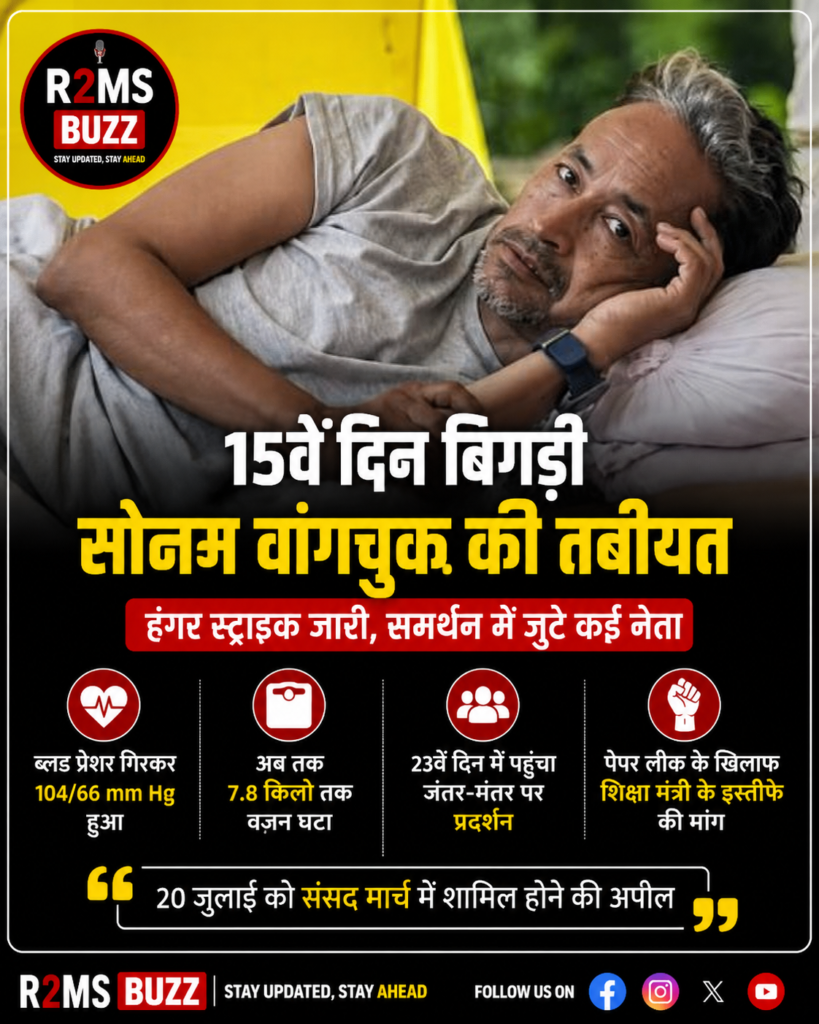
One of the political demands raised during the protest concerns Union Education Minister Dharmendra Pradhan.
The Cockroach Janta Party has called for his resignation, alleging that repeated examination controversies require greater political accountability.
The government has not accepted this demand.
Officials have previously stated that various measures have been introduced to strengthen examination security and investigate reported irregularities.
The issue continues to generate political debate across multiple parties.
Allegations Regarding Student Suicides
During the protest, organizers also referred to reports linking student distress to examination controversies.
Protest leaders claimed that 20 students died by suicide following the NEET paper leak controversy and demanded ₹1 crore compensation for each affected family.
These statements reflect the position of the protest organizers.
Authorities have not publicly confirmed that all such deaths were directly linked to the examination controversy, and investigations into individual cases may differ.
Mental health experts have repeatedly emphasized that examination-related stress remains a serious concern requiring long-term policy attention.
Political Leaders Extend Support
The protest has attracted support from several political leaders.
Among those visiting Jantar Mantar were:
- Samajwadi Party MP Pushpendra Saroj
- Former Kerala Health Minister K K Shailaja
Both leaders expressed solidarity with the protesters and emphasized the importance of ensuring fairness within India’s education system.
Their participation has added political visibility to the movement, which initially began as a citizen-led campaign.
Other social organizations and student groups have also extended support.
Wangchuk’s Message to Citizens
Despite his declining health, Sonam Wangchuk used the protest platform to deliver a broader message about civic responsibility.
Addressing supporters, he urged people not to depend entirely on prominent personalities or public heroes to solve national problems.
Instead, he encouraged every citizen to fulfill personal responsibilities and actively participate in strengthening democratic institutions.
According to Wangchuk, meaningful change requires ordinary citizens to remain engaged in public life rather than expecting a few individuals to lead every movement.
His message resonated with many supporters present at the protest.
Call for Parliament March
As the movement gathers momentum, Wangchuk has appealed to citizens from across the country to participate in a Parliament March scheduled for July 20.
The proposed march coincides with the beginning of the Monsoon Session of Parliament.
Organizers believe the timing will help draw lawmakers’ attention to the issues being raised during the protest.
They hope the demonstration will encourage wider parliamentary discussion regarding examination reforms and student welfare.
Police and administrative authorities are expected to make security arrangements depending on participation levels.
Growing Debate Over Examination Reforms
The protest reflects broader concerns regarding competitive examinations in India.
Every year, millions of students appear for entrance and recruitment examinations seeking admission to educational institutions or government employment.
Even isolated allegations of irregularities can affect public confidence because of the high stakes involved.
Education experts have suggested several measures to improve examination integrity, including:
- Advanced digital monitoring
- Encrypted question paper distribution
- Stronger cybersecurity systems
- Independent auditing mechanisms
- Faster legal action against organized paper leak networks
Many specialists argue that technological improvements must be accompanied by institutional accountability.
Student Concerns Continue
Students participating in the protest say examination integrity directly affects their future.
Many candidates spend several years preparing for highly competitive tests, often sacrificing employment opportunities and investing significant financial resources in coaching and study materials.
Repeated controversies surrounding examination processes have increased anxiety among many aspirants.
Protesters argue that restoring trust in the system requires visible reforms as well as strict punishment for those responsible for malpractice.
Government Response
The Union Government has previously stated that it remains committed to protecting the integrity of national examinations.
Authorities have announced investigations into reported irregularities whenever allegations have surfaced.
The government has also introduced legislative and administrative measures aimed at preventing organized examination fraud.
However, protest organizers argue that stronger implementation and greater transparency remain necessary.
The discussion continues both inside and outside Parliament.
The Road Ahead
With Wangchuk continuing his indefinite hunger strike despite deteriorating health, attention is likely to remain focused on the protest in the coming days.
Medical professionals continue monitoring his condition, while organizers prepare for the planned Parliament March.
Whether the movement leads to policy changes will depend on future discussions between stakeholders, government institutions, and civil society organizations.
Regardless of its outcome, the protest has already succeeded in bringing examination reforms back into national public debate.
Conclusion
Sonam Wangchuk’s hunger strike has become a powerful symbol of growing concerns over transparency and accountability in India’s examination system. As his health declines after 15 days without food, support for the broader protest at Jantar Mantar continues to expand, drawing political leaders, students, and citizens into the conversation.
The demands raised by protesters—including stronger safeguards against paper leaks, institutional accountability, and reforms to restore confidence in competitive examinations—highlight issues affecting millions of students across the country. With the planned Parliament March approaching and public attention intensifying, the coming days could prove significant in determining how the debate over education reforms moves forward.
Frequently Asked Questions (FAQs)
Why is Sonam Wangchuk on a hunger strike?
He is participating in an indefinite hunger strike to support demands for greater transparency, accountability, and reforms in India’s examination system.
How long has the protest been going on?
The protest began on June 20, while Sonam Wangchuk joined on June 28. The movement has now entered its 23rd day.
What are the protesters demanding?
The protesters are seeking examination reforms, stronger action against paper leaks, greater transparency, and accountability. They have also called for the resignation of Union Education Minister Dharmendra Pradhan.
What is Wangchuk’s health condition?
Doctors have reported that his blood pressure has fallen to 104/66 mm Hg, and he has lost approximately 7.8 kilograms since beginning his hunger strike.
What is the Parliament March?
Organizers have called for a Parliament March on July 20, coinciding with the start of the Monsoon Session, to draw lawmakers’ attention to their demands.