US Softens Russia Sanctions Bill: Relief for India and China as Proposed Russian Oil Tariff Reduced to 100%
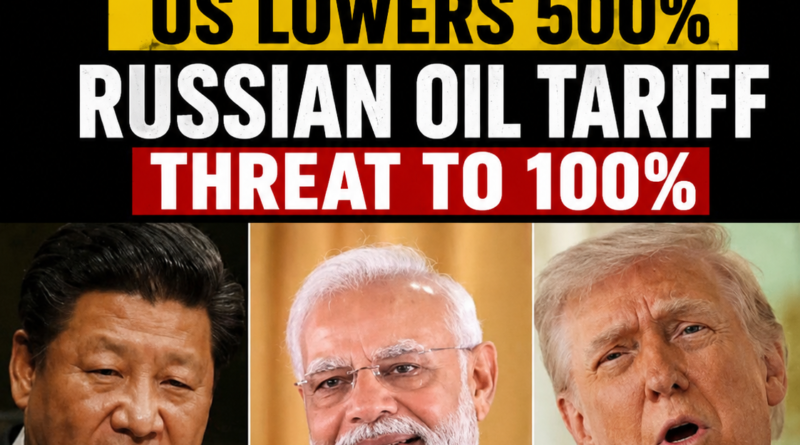
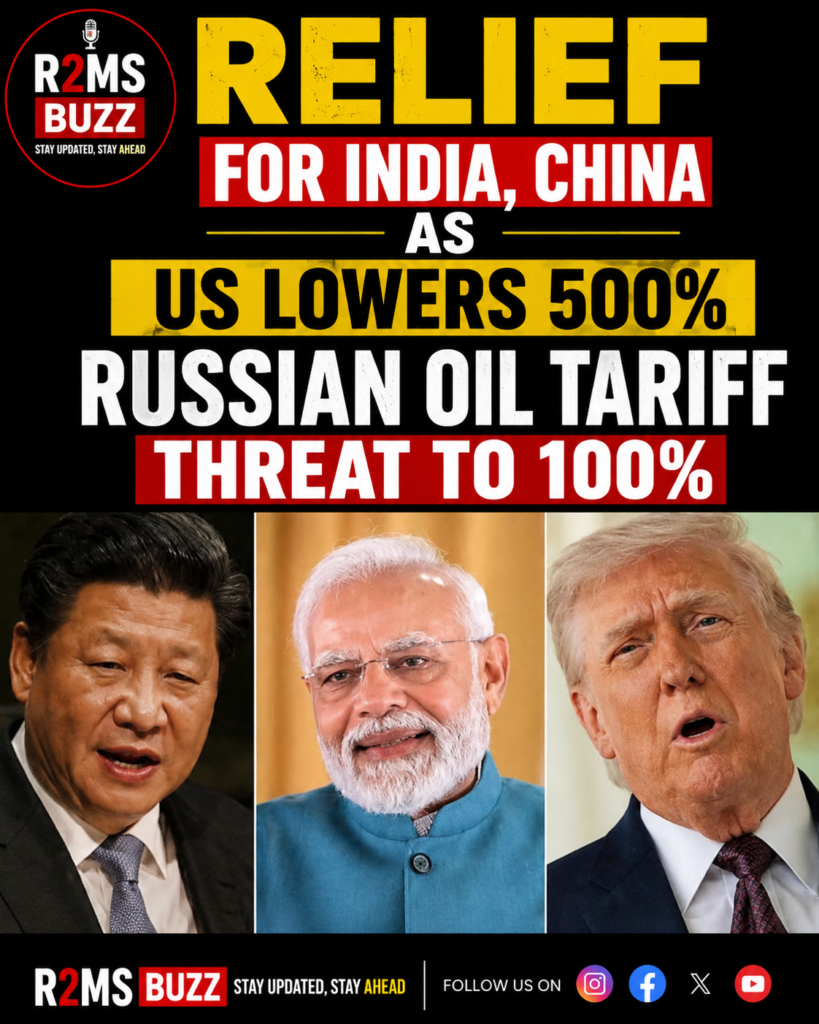
The United States has significantly revised its proposed sanctions legislation targeting Russia, reducing the maximum tariff on countries importing Russian oil and natural gas from 500% to 100%. The move is being viewed as a major relief for countries such as India and China, which remain among the world’s largest buyers of Russian energy.
The updated bipartisan bill, initially introduced by the late Republican Senator Lindsey Graham and Democratic Senator Richard Blumenthal, seeks to maintain economic pressure on Moscow while making the proposed penalties more practical and politically acceptable.
Although the revised proposal still authorizes the United States to impose substantial tariffs on countries purchasing Russian energy, reducing the maximum rate from 500% to 100% lowers the potential economic impact on key trading partners. The bill also expands sanctions against Russian financial institutions, energy projects, and the country’s so-called “shadow fleet” of oil tankers.
The proposed legislation now moves closer to congressional consideration and could become one of the most significant measures adopted by Washington to pressure Russia over the ongoing war in Ukraine.
Why the Bill Was Revised
When the sanctions proposal was first introduced, it recommended imposing 500% tariffs on imports from countries continuing to purchase Russian oil and natural gas.
Many analysts argued that such an extraordinarily high tariff could severely disrupt global trade and affect diplomatic relations between the United States and major economies such as India and China.
After months of negotiations involving lawmakers and the White House, the proposal was revised.
The latest version reduces the maximum tariff to 100%, providing the U.S. President with greater flexibility while still maintaining strong economic pressure on countries heavily dependent on Russian energy.
Officials involved in drafting the legislation believe the revised approach is more likely to gain broader political support.
Relief for India and China
India and China have become two of Russia’s largest energy customers since Western sanctions reshaped global oil markets following the Ukraine conflict.
Both countries have continued importing discounted Russian crude, helping meet their domestic energy demands while maintaining economic stability.
Under the original proposal, imports from these countries could have faced tariffs of up to 500%, creating uncertainty for exporters and businesses involved in international trade.
The revised cap of 100% is therefore being viewed as a significant reduction in potential economic pressure.
Although the proposed tariffs remain substantial, the softer approach reduces the immediate risk of severe trade disruption.
Purpose of the Sanctions Bill
The central objective of the legislation remains unchanged.
American lawmakers hope increased economic pressure will reduce Russia’s financial ability to continue military operations in Ukraine.
The sanctions proposal seeks to:
- Discourage purchases of Russian energy.
- Reduce revenue flowing into the Russian economy.
- Increase diplomatic pressure on Moscow.
- Encourage alternative energy sourcing.
- Strengthen international sanctions enforcement.
Supporters believe limiting Russia’s energy earnings could influence future diplomatic negotiations.
Countries Most Affected
The proposed legislation primarily affects nations that continue purchasing significant quantities of Russian oil and natural gas.
Among the largest buyers of Russian crude are:
- India
- China
- Slovakia
- Hungary
- Azerbaijan
Major importers of Russian natural gas include:
- China
- France
- Japan
- Hungary
- Belgium
The legislation recognises that many countries remain dependent on Russian energy due to existing infrastructure and long-term contracts.
Exception for Some Countries
One of the most important changes introduced in the revised bill is an exemption mechanism.
Countries importing less than 15% of Russia’s natural gas exports while actively reducing their dependence may qualify for relief from certain penalties.
According to lawmakers, countries that could potentially benefit include:
- Japan
- France
- Hungary
- Belgium
The exemption reflects efforts to balance geopolitical objectives with practical energy realities.
Sanctions on Russia’s Shadow Fleet
The revised proposal also expands sanctions beyond traditional trade measures.
It specifically targets Russia’s so-called shadow fleet of oil tankers.
These vessels are believed to transport Russian oil while avoiding Western maritime restrictions and insurance systems.
Lawmakers argue that restricting these operations would make it more difficult for Russia to export energy through unofficial channels.
Financial Institutions Under Scrutiny
In addition to energy-related measures, the bill proposes sanctions against major Russian financial institutions.
Among the entities mentioned are:
- Central Bank of the Russian Federation.
- State-owned financial institutions.
- Organisations supporting Russia’s defence sector.
Supporters argue that restricting financial operations would increase economic pressure on Moscow.
Energy Projects Also Targeted
Several major Russian energy developments have also been included in the proposed sanctions.
These reportedly include:
- Yamal LNG.
- Arctic LNG 1.
- Arctic LNG 2.
- Arctic LNG 3.
These projects represent important components of Russia’s long-term energy export strategy.
Sanctioning them could affect future investment and international cooperation.
Presidential Waiver Included
The revised bill also gives the U.S. President significant flexibility.
Under the proposal, the President may temporarily waive certain sanctions if doing so is considered to be in the national interest of the United States.
This provision allows Washington to respond to changing geopolitical circumstances without requiring immediate legislative amendments.
Lindsey Graham’s Final Foreign Policy Initiative
The sanctions proposal carries particular significance because it was among the final major foreign policy initiatives championed by the late Senator Lindsey Graham.
Before his reported death, Graham strongly advocated increasing economic pressure on Russia.
He worked closely with Democratic Senator Richard Blumenthal to build bipartisan support for the legislation.
Several lawmakers have described the bill as one of Graham’s most important legislative priorities.
Donald Trump Expresses Support
President Donald Trump has indicated support for the revised proposal.
Speaking to reporters, Trump suggested the legislation could eventually become law.
He also proposed expanding the bill further by including sanctions targeting Iran and Hezbollah.
However, some lawmakers believe adding additional provisions could delay passage.
Democrats Urge Focus
Senator Richard Blumenthal has urged Congress to concentrate on passing the existing legislation rather than expanding it further.
According to Blumenthal, broad bipartisan support already exists for the current proposal.
Maintaining that support may improve the chances of successful passage.
Why Global Markets Are Watching
Energy markets are closely monitoring developments surrounding the legislation.
Russia remains one of the world’s largest exporters of crude oil and natural gas.
Any significant restrictions affecting international energy trade can influence:
- Global oil prices.
- Natural gas markets.
- Inflation.
- Shipping costs.
- Energy security.
Investors therefore continue following negotiations closely.
Impact on India
For India, the revised proposal reduces immediate uncertainty surrounding future trade with the United States.
India has consistently maintained that its energy purchases are guided by national economic interests.
Indian officials have also emphasised the importance of affordable energy supplies for supporting economic growth.
Although the revised proposal remains under consideration, lowering the proposed tariff substantially eases immediate concerns.
What Happens Next?
The legislation must still proceed through the U.S. legislative process.
Lawmakers are expected to debate the proposal before voting.
If approved by Congress and signed into law, the President would receive authority to implement the proposed sanctions and tariffs.
However, the administration would retain discretion regarding how and when individual measures are applied.
Conclusion
The revised U.S. Russia sanctions bill represents a significant shift in Washington’s approach toward countries purchasing Russian energy. By reducing the proposed tariff ceiling from 500% to 100%, lawmakers have attempted to balance geopolitical pressure on Moscow with the realities of global energy markets and international trade.
For countries such as India and China, the revised proposal offers important relief while leaving open the possibility of future tariffs if the legislation becomes law. At the same time, the bill continues targeting Russia’s financial system, energy infrastructure, and oil exports, reflecting the United States’ broader strategy of increasing economic pressure over the Ukraine conflict.
As Congress prepares to consider the legislation, governments, businesses, and global energy markets will be watching closely, as the final outcome could influence international trade, diplomatic relations, and energy security well beyond the United States.
Frequently Asked Questions (FAQs)
1. Why did the US revise the Russia sanctions bill?
The tariff proposal was reduced from 500% to 100% after negotiations aimed at making the legislation more practical and gaining wider political support.
2. Why is India affected by the bill?
India is one of the largest importers of Russian crude oil, making it one of the countries that could be impacted if the legislation becomes law.
3. What other sanctions are included?
The bill proposes sanctions on Russian officials, financial institutions, the shadow tanker fleet, and major energy projects.
4. Can the US President waive the sanctions?
Yes. The revised proposal allows the President to waive sanctions if doing so is considered to be in the U.S. national interest.
5. Has the bill become law?
No. The proposal is still moving through the U.S. legislative process and has not yet been enacted.
- What to Do After 12th? My Honest Opinion for Students and Parents
- AI in Education: How Artificial Intelligence Is Changing the Way Students Learn
- Best AI Tools in 2026: 20 Powerful AI Tools That Can Save Time and Boost Productivity
- Can AI Take Over Jobs in the IT Sector? The Truth Every Tech Professional Should Know
- Jantar Mantar Protest: Why I Believe the Movement Should Stay Focused on Students