Why AC is harmful to Use All the Time at home: Health, Cost, and Environmental Facts
Why You Shouldn’t Use an Air Conditioner All the Time: Facts Every Homeowner Should Know
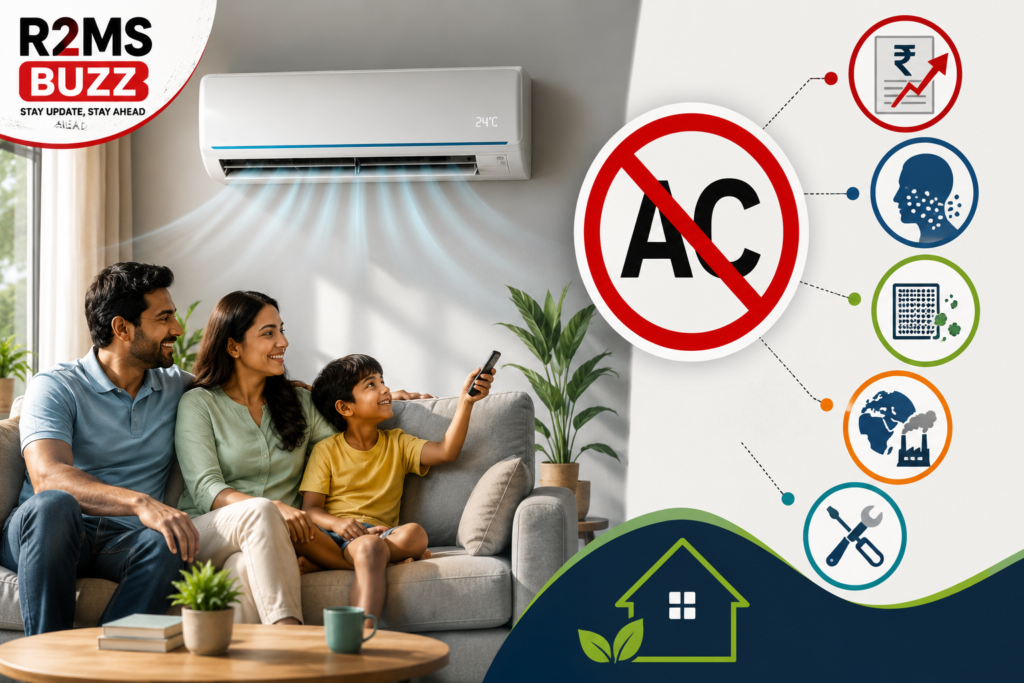
On a hot summer day, switching on the air conditioner feels like the easiest way to stay comfortable. For many families, an AC has become an essential part of daily life rather than a luxury. While air conditioners offer quick relief from extreme heat, using them for long hours every day may have drawbacks.
This doesn’t mean you should never use an AC. Instead, it’s about using it wisely. Excessive use can affect your electricity bill, indoor air quality, and even your comfort if the system isn’t maintained properly.
Let’s look at what research and experts say.
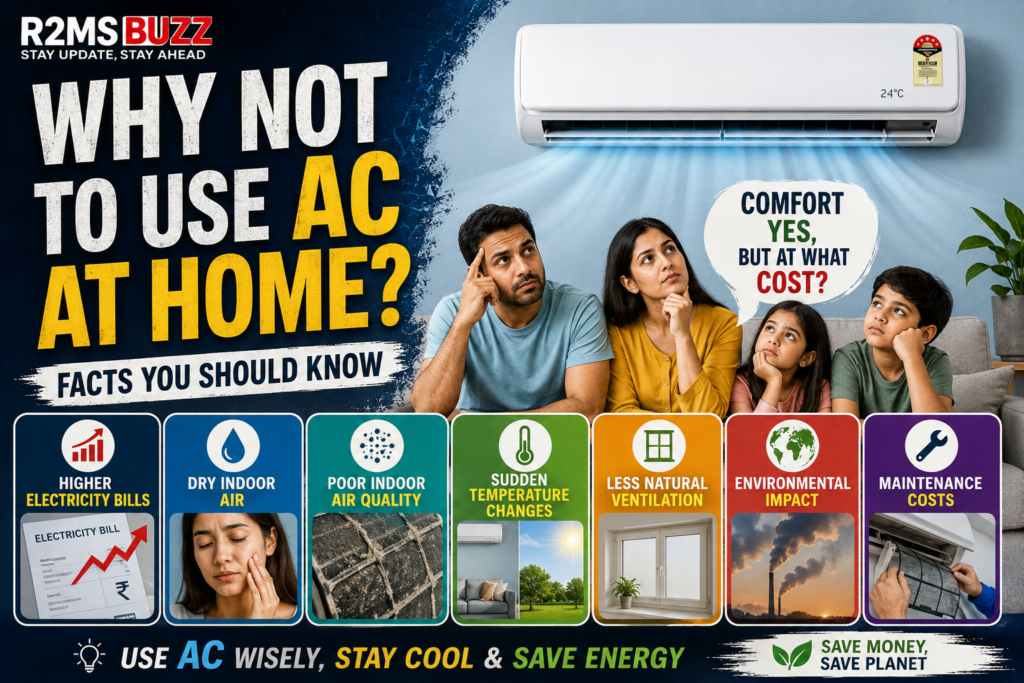
1. Higher Electricity Bills
One of the biggest disadvantages of using an AC continuously is increased electricity consumption.
Air conditioners are among the highest energy-consuming appliances in most homes. The longer they run, the more electricity they use.
If your AC is old, poorly maintained, or set to a very low temperature, your monthly electricity bill can rise significantly.
Tip
Setting your AC between 24°C and 26°C is often recommended as a balance between comfort and energy efficiency.
2. Dry Indoor Air
Air conditioners remove humidity from the air while cooling a room.
Although this makes the room feel comfortable, it can also cause:
- Dry skin
- Dry eyes
- Dry throat
- Chapped lips
People who wear contact lenses or spend long hours indoors may notice these effects more often.
3. Poor Indoor Air Quality
An air conditioner does not automatically guarantee clean air.
If filters are not cleaned regularly, dust, pollen, and other particles can build up inside the unit and circulate through the room.
Dirty filters may reduce cooling efficiency and worsen indoor air quality.
Good Practice
Clean or replace AC filters according to the manufacturer’s recommendations.
4. Sudden Temperature Changes
Walking repeatedly between a very cold room and hot outdoor temperatures can feel uncomfortable for some people.
Large temperature differences may make it harder for the body to adjust quickly, especially during extremely hot weather.
Keeping the indoor temperature moderately cool rather than excessively cold can improve comfort.
5. Less Natural Ventilation
If the AC remains on all day with doors and windows closed, fresh outdoor air may not circulate as often.
Opening windows when weather conditions allow can help improve ventilation and refresh indoor air.
6. Environmental Impact
Most electricity still comes, at least in part, from energy sources that produce greenhouse gas emissions in many regions.
Higher AC usage means:
- More electricity demand
- Increased energy consumption
- Greater environmental impact
Modern energy-efficient air conditioners reduce electricity use compared with older models, but responsible use still matters.
7. Noise and Maintenance Costs
Air conditioners need regular servicing.
Without maintenance, problems such as reduced cooling, higher energy use, water leakage, or mechanical issues may develop.
Regular servicing helps improve performance and extend the life of the unit.
Is Using an AC Bad for Your Health?
Many people believe that air conditioners directly cause illness.
The reality is more balanced.
Using an AC itself does not cause infections like the common cold.
However, poor maintenance, very low temperatures, or dry indoor air can contribute to discomfort for some people.
A clean, well-maintained air conditioner used at a reasonable temperature is generally considered safe for most healthy individuals.
Smart Ways to Reduce AC Usage
Instead of avoiding AC completely, you can reduce unnecessary use by:
- Using ceiling or pedestal fans.
- Closing curtains during the hottest part of the day.
- Improving home insulation.
- Using natural ventilation during cooler hours.
- Wearing light cotton clothing indoors.
- Drinking enough water to stay hydrated.
- Using energy-efficient appliances.
Small changes can reduce electricity consumption without sacrificing comfort.
When Is It Important to Use an AC?
Air conditioners can play an important role during extreme heat.
They may be especially helpful for:
- Older adults
- Young children
- People with certain medical conditions
- Areas experiencing severe heat waves
During dangerously high temperatures, staying cool can help reduce the risk of heat-related illness.
Common Myths About Air Conditioners
Myth: AC always makes people sick.
Fact: Illness is not caused by the AC itself. Poor maintenance or dry air may contribute to discomfort, but infections are caused by viruses or bacteria.
Myth: Lower temperatures cool a room faster.
Fact: Setting an AC to 16°C does not cool the room instantly. It simply tells the system to continue cooling to that lower temperature, often using more energy.
Myth: Keeping the AC on all day is always best.
Fact: Using timers, sleep mode, or adjusting the temperature when possible can improve energy efficiency.
My Opinion
In my opinion, an air conditioner should be treated as a useful appliance—not something that runs all day without thought.
Comfort is important, especially during intense summer heat. But relying entirely on AC can increase electricity costs and reduce opportunities for natural ventilation.
Using an AC wisely, maintaining it properly, and combining it with simple cooling habits can provide comfort while also saving energy.
Frequently Asked Questions
Should I avoid using an AC completely?
No. Air conditioners are useful, especially during very hot weather. The goal is to use them responsibly rather than avoid them altogether.
What is the best AC temperature?
Many energy experts recommend 24°C to 26°C for a balance between comfort and efficiency.
Can AC cause dehydration?
Air-conditioned environments can feel dry, so drinking enough water and maintaining indoor humidity can help.
How often should AC filters be cleaned?
Cleaning schedules vary by manufacturer and usage, but regular inspection and cleaning help maintain performance and indoor air quality.
Conclusion
Air conditioners make homes more comfortable, especially during hot summers, but using them continuously isn’t always the best approach. Higher electricity bills, dry indoor air, reduced ventilation, and environmental impacts are all factors worth considering. The best solution is balance: use your AC when needed, keep it well maintained, set it to an efficient temperature, and combine it with simple cooling habits. By doing so, you can stay comfortable while saving energy and creating a healthier indoor environment.
Also See related Article : Bike mileage of 176 to 200 kilometers per litre, Sabrina Gonzalez Pasterski: She Built and Flew a Plane at 14, AI vs Human: Can Artificial Intelligence Replace Human Intelligence?, Best AI Tools in 2026: 20 Powerful AI Tools That Can Save Time and Boost Productivity, Can AI Take Over Jobs in the IT Sector? The Truth Every Tech Professional Should Know