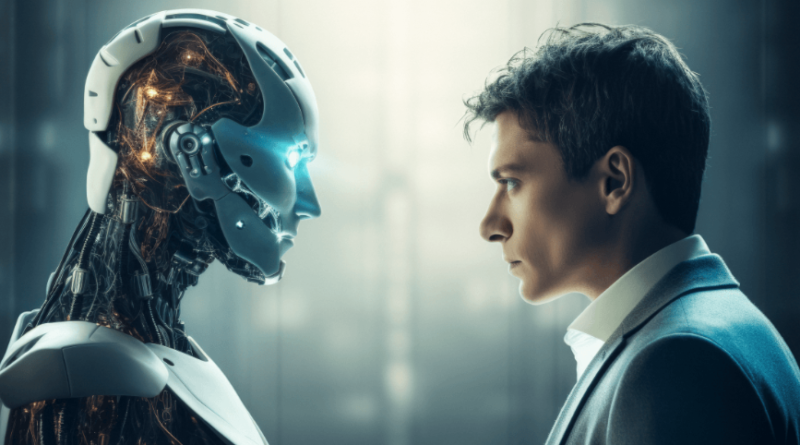
AI vs Human: Can Artificial Intelligence Replace Human Intelligence?
AI vs Human: Why Artificial Intelligence Can Assist but Never Replace Human Intelligence
Artificial Intelligence (AI) has become one of the most talked-about technologies of the decade. From chatbots and virtual assistants to self-driving vehicles and medical diagnostics, AI is transforming industries at an unprecedented pace. As AI systems become more capable, a common question arises: Will AI replace humans?
The short answer is no. While AI is changing how people work, learn, and communicate, it is designed to assist human beings rather than replace them entirely. AI excels at processing vast amounts of data, identifying patterns, and automating repetitive tasks. Humans, however, possess qualities such as creativity, empathy, ethical judgment, emotional intelligence, and lived experience—traits that machines cannot truly replicate.
Rather than viewing the future as AI versus humans, it is more accurate to see it as AI working alongside humans.
What Is Artificial Intelligence?
Artificial Intelligence refers to computer systems that perform tasks typically associated with human intelligence. These tasks include recognizing speech, understanding language, analyzing images, making predictions, and generating text, code, music, or designs based on patterns learned from data.
AI powers many everyday applications, including:
- Voice assistants
- Language translation tools
- Recommendation systems
- Customer support chatbots
- Navigation apps
- Fraud detection systems
- Medical imaging analysis
- Content generation tools
AI continues to evolve rapidly, enabling businesses and individuals to work more efficiently.
What Makes Humans Unique?
Despite technological advances, human intelligence extends far beyond information processing.
People can:
- Think critically in unfamiliar situations.
- Understand emotions and social context.
- Make ethical decisions.
- Learn from personal experiences.
- Show compassion and empathy.
- Create original art, literature, and innovation.
- Adapt to unexpected circumstances with intuition.
These qualities stem from consciousness, relationships, culture, and real-world experiences—areas where AI has significant limitations.
AI vs Human: A Comparison
| Feature | Artificial Intelligence | Human Intelligence |
|---|---|---|
| Speed | Processes information rapidly | Slower but thoughtful |
| Learning | Learns from data and training | Learns through experience and education |
| Creativity | Generates content from learned patterns | Creates original ideas and innovations |
| Emotions | Does not experience genuine emotions | Understands and expresses emotions |
| Decision Making | Based on algorithms and data | Combines logic, ethics, intuition, and experience |
| Adaptability | Limited to training and design | Highly adaptable in changing environments |
| Common Sense | Often limited | Naturally applies common sense in daily life |
The comparison shows that AI and humans excel in different areas. One is not universally better than the other.
How AI Is Transforming Everyday Life
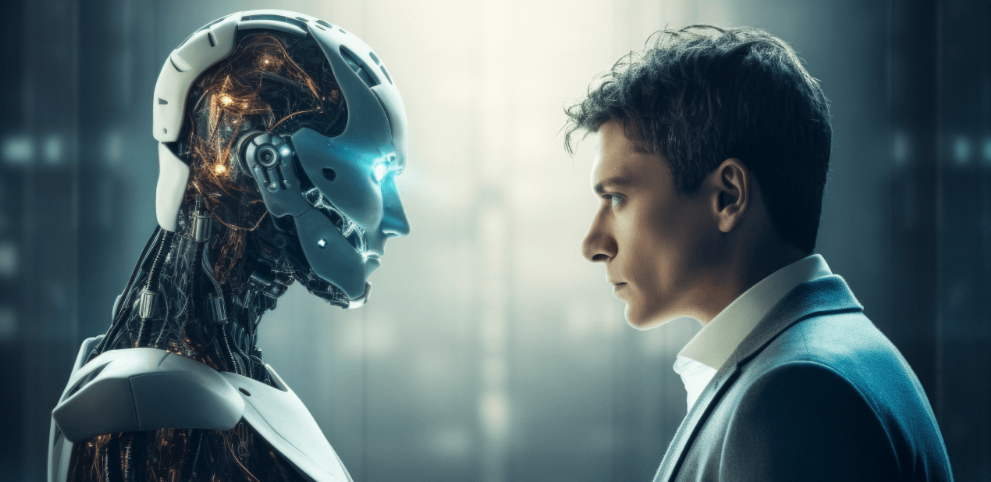
AI has become part of daily routines for millions of people. Whether using search engines, streaming platforms, navigation apps, or productivity tools, AI quietly supports many digital experiences.
In healthcare, AI helps doctors analyze medical images and identify patterns that may support diagnosis. In education, it can personalize learning experiences and provide instant feedback. Businesses use AI to automate repetitive tasks, improve customer service, and analyze large datasets for informed decision-making.
These applications save time and improve efficiency, allowing people to focus on work that requires creativity, strategy, and human interaction.
Can AI Replace Human Jobs?
AI is changing the job market by automating certain routine tasks. Roles involving repetitive data processing, scheduling, or basic administrative work may increasingly rely on AI-powered systems.
However, AI is also creating demand for new skills and professions, including:
- AI developers
- Data analysts
- Machine learning engineers
- AI ethics specialists
- Prompt engineers
- Cybersecurity professionals
- Human-AI collaboration specialists
Many occupations are evolving rather than disappearing. Professionals who learn to use AI effectively can often improve productivity and expand their capabilities instead of being replaced.
The Importance of Human Creativity
Creativity remains one of humanity’s defining strengths.
While AI can generate text, images, music, or code based on patterns in its training data, it does not possess imagination, personal memories, or emotional experiences. Human creativity is shaped by culture, curiosity, observation, and lived experiences.
Artists, writers, filmmakers, scientists, entrepreneurs, and innovators continue to push boundaries by asking original questions and exploring ideas beyond existing patterns.
AI can support the creative process, but human vision gives creative work its meaning and purpose.
Ethical Challenges of Artificial Intelligence
As AI becomes more integrated into society, ethical considerations become increasingly important.
Some key challenges include:
- Protecting personal privacy
- Reducing algorithmic bias
- Ensuring transparency
- Preventing misinformation
- Maintaining accountability for AI-assisted decisions
- Protecting intellectual property
- Promoting responsible use of AI
Governments, technology companies, researchers, and civil society all play important roles in developing responsible AI systems that benefit society.
AI in Education
Educational institutions are increasingly exploring AI-powered tools to support learning. Students can use AI to understand concepts, summarize information, practice languages, or receive personalized study assistance.
However, AI should complement—not replace—critical thinking, independent research, classroom discussions, and problem-solving. Developing analytical skills, communication abilities, and ethical judgment remains essential for long-term success.
Teachers also continue to play a vital role in mentoring, motivating, and guiding students beyond academic content.
AI and the Future of Work
The future workplace is likely to combine human expertise with AI-powered tools.
Employees who understand how to work effectively with AI may gain advantages in productivity, decision-making, and innovation. Rather than competing directly with machines, professionals can focus on uniquely human strengths such as leadership, collaboration, communication, creativity, and strategic thinking.
Continuous learning and digital literacy will become increasingly valuable as technology evolves.
Why Collaboration Is Better Than Competition
The discussion should not center on whether AI will defeat humans. Instead, the focus should be on how humans can responsibly use AI to solve complex problems.
Examples include:
- Doctors using AI to support medical diagnosis.
- Journalists using AI for research while maintaining editorial judgment.
- Designers using AI to generate concepts before refining them creatively.
- Businesses using AI to automate repetitive tasks while employees focus on customer relationships and innovation.
- Researchers using AI to analyze massive datasets more efficiently.
In each case, human oversight remains essential.
Frequently Asked Questions
What is the main difference between AI and human intelligence?
AI processes information using algorithms and data, while human intelligence combines reasoning, emotions, creativity, ethics, and life experiences.
Can AI completely replace humans?
AI can automate specific tasks, but it cannot fully replace human qualities such as empathy, creativity, moral judgment, and personal experience.
Is AI beneficial for society?
When used responsibly, AI can improve productivity, healthcare, education, research, and business operations while supporting human decision-making.
Which jobs are least likely to be replaced by AI?
Roles requiring emotional intelligence, leadership, creativity, complex decision-making, caregiving, negotiation, and interpersonal communication are generally less suited to full automation.
How can people prepare for an AI-driven future?
Develop digital skills, strengthen critical thinking, improve communication, embrace lifelong learning, and learn how to use AI as a productivity tool.
Also see related Article eSIM technology,AI Technology, 💻 Technology, Sabrina Gonzalez Pasterski: She Built and Flew a Plane at 14