
Who was Lindsey Graham? Saudi-Israel Peace Deal
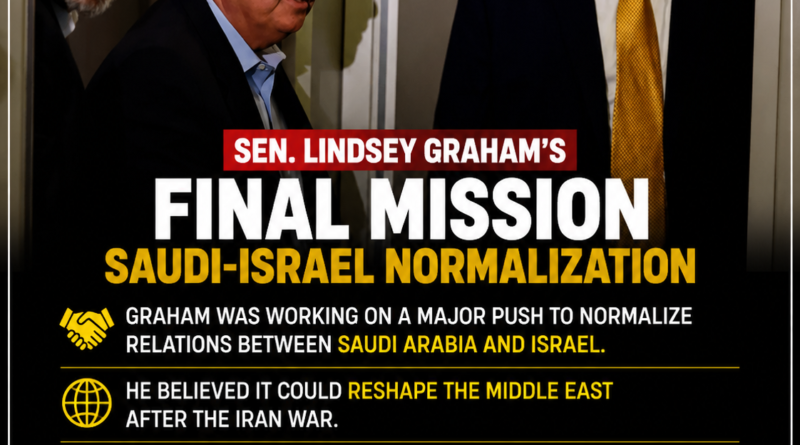
The passing of longtime U.S. Senator Lindsey Graham has drawn attention not only to his decades in American politics but also to what several reports describe as one of his most ambitious foreign policy goals—a comprehensive diplomatic effort to normalize relations between Saudi Arabia and Israel.
According to published reports, Graham believed such an agreement could fundamentally reshape the Middle East by strengthening regional stability, expanding economic cooperation, and creating a new security framework following the conflict involving Iran. In the weeks leading up to his death, the South Carolina Republican was reportedly discussing the proposal with President Donald Trump and senior U.S. officials while laying the groundwork for a broader diplomatic initiative.
Although the initiative never formally began, those familiar with the discussions say Graham viewed Saudi-Israel normalization as one of the defining foreign policy objectives of his career.
A Longtime Advocate of Middle East Diplomacy
Throughout his years in the U.S. Senate, Lindsey Graham was widely recognized for his strong interest in foreign affairs. As a senior Republican voice on national security, he frequently supported closer cooperation between the United States and its allies in the Middle East.
According to reports, Graham believed that a normalization agreement between Saudi Arabia and Israel could represent one of the most significant diplomatic achievements in the region since the Abraham Accords.
His vision reportedly went beyond symbolic recognition. He saw expanded diplomatic ties as a pathway toward stronger security cooperation, increased investment, technological partnerships, and greater regional stability.
Those who worked with Graham have described him as someone who viewed diplomacy and security as closely connected.
Why Saudi Arabia Matters
Saudi Arabia occupies a unique position in the Arab and Islamic worlds.
As the largest economy in the Middle East and home to Islam’s two holiest cities, the kingdom’s diplomatic decisions carry significant regional influence.
While several Arab nations have normalized relations with Israel in recent years, Saudi Arabia has consistently maintained that any formal agreement must include meaningful progress toward resolving the Israeli-Palestinian conflict.
According to reports, Graham recognized this position and believed future negotiations would need to address Saudi Arabia’s longstanding conditions.
Diplomats have long viewed Saudi recognition of Israel as one of the most consequential developments that could reshape regional politics.
Reported Discussions With Trump Administration Officials
According to media reports, Graham spent recent weeks discussing the proposed initiative with President Donald Trump and several senior officials involved in Middle East policy.
Among the individuals reportedly involved in discussions were:
- Jared Kushner
- Steve Witkoff
- Ron Dermer
- Princess Reema bint Bandar
- Prince Faisal bin Farhan
These conversations reportedly focused on identifying political conditions that could make normalization possible after current regional tensions eased.
Neither the White House nor the Saudi government publicly announced any finalized agreement.
Iran Conflict Seen as Major Obstacle
According to the reports, Graham believed that progress toward Saudi-Israel normalization depended heavily on reducing regional instability.
He reportedly argued that the ongoing confrontation involving Iran and tensions surrounding the Strait of Hormuz would first need to be addressed before broader diplomatic efforts could move forward.
The Strait of Hormuz remains one of the world’s most strategically important shipping routes, carrying a significant share of global oil exports.
Continued military tensions in the region have complicated diplomatic efforts involving multiple countries.
Observers say any lasting peace initiative would likely require greater regional security before negotiations could advance.
The Strait of Hormuz and Regional Security
Recent attacks on commercial shipping and military exchanges have highlighted the fragile security environment across the Gulf.
According to reports, Graham believed reopening and securing maritime trade routes would be essential for restoring confidence among regional partners.
He reportedly urged consideration of stronger measures if diplomatic efforts failed to ensure freedom of navigation through the Strait of Hormuz.
Maritime security has become a major concern not only for Gulf countries but also for global energy markets that depend on uninterrupted shipping.
A U.S.-Saudi Defense Treaty
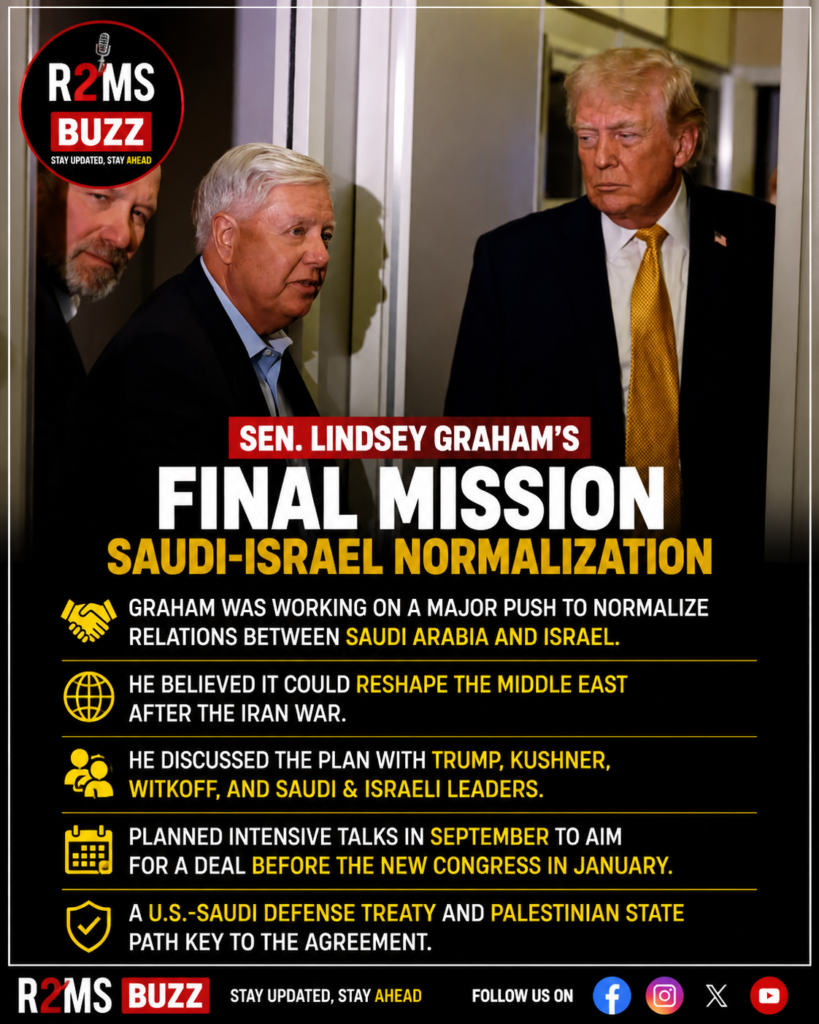
One of the central elements reportedly discussed alongside normalization involved a proposed defense agreement between the United States and Saudi Arabia.
Such an arrangement would likely require approval from two-thirds of the U.S. Senate before taking effect.
Supporters believe a formal security partnership could strengthen regional deterrence while encouraging broader diplomatic cooperation.
However, treaties of this nature typically require extensive negotiations and bipartisan political support.
No final agreement had been announced.
Palestinian Statehood Remains Central
Despite interest in closer ties with Israel, Saudi Arabia has repeatedly stated that any normalization process must include a credible pathway toward the establishment of a Palestinian state.
That position has remained consistent in Saudi foreign policy.
Diplomatic analysts note that balancing Israel’s security concerns with Palestinian aspirations remains one of the most difficult challenges facing negotiators.
According to reports, Graham understood these political realities and viewed them as essential components of any future agreement.
Final Foreign Policy Priorities
Media reports indicate that Graham remained deeply engaged in foreign policy discussions during his final days.
According to those accounts, his conversations included topics such as sanctions on Russia, developments involving Iran, and prospects for Saudi-Israel normalization.
These issues had long been central to Graham’s work in the Senate.
Over more than three decades in Congress, he consistently advocated an active U.S. role in international security and alliances.
His support for NATO, Ukraine, and Israel made him one of Washington’s most recognizable voices on foreign affairs.
Reactions From International Leaders
Following news of Graham’s death, several Israeli leaders publicly praised his longstanding support for their country.
Prime Minister Benjamin Netanyahu described Graham as a close friend who understood the importance of the U.S.-Israel relationship, while other Israeli officials highlighted his decades of support for Israeli security.
International reactions reflected Graham’s influence well beyond domestic American politics.
Legacy Beyond Politics
Regardless of political differences surrounding many of his positions, Graham’s influence on U.S. foreign policy was significant.
Supporters viewed him as a consistent advocate for strong alliances and American global leadership.
Critics often challenged his hawkish positions, particularly regarding military intervention.
Yet few disputed his sustained engagement with international diplomacy.
The reported Saudi-Israel initiative illustrates the kind of long-term strategic thinking that characterized much of his Senate career.
What Happens Next?
Graham’s passing leaves uncertainty over whether the reported normalization effort will continue in its original form.
Diplomatic engagement between Saudi Arabia, Israel, and the United States is expected to remain an important regional issue, but future negotiations will depend on political developments, security conditions, and decisions by current leaders.
Much will also depend on progress toward reducing tensions involving Iran and broader efforts to stabilize the Middle East.
Conclusion
Senator Lindsey Graham’s reported diplomatic vision reflected his belief that lasting regional stability required both strong security partnerships and expanded diplomatic engagement. According to published reports, he viewed Saudi-Israel normalization as a historic opportunity that could reshape Middle Eastern politics for decades to come.
Although that initiative remained unfinished at the time of his death, the issues he focused on—including regional security, maritime stability, U.S.-Saudi cooperation, and the future of Arab-Israeli relations—are likely to remain central to international diplomacy in the years ahead. His reported efforts underscore how individual policymakers can influence discussions on some of the world’s most complex geopolitical challenges.
Frequently Asked Questions (FAQs)
Who was Lindsey Graham?
Lindsey Graham was a Republican U.S. Senator from South Carolina known for his active role in foreign policy, national security, and international diplomacy. He died in July 2026 at the age of 71.
What was his reported final diplomatic initiative?
According to reports, he was working toward a framework for normalizing relations between Saudi Arabia and Israel.
Why is Saudi-Israel normalization important?
Many analysts believe formal diplomatic ties between Saudi Arabia and Israel could reshape regional security, trade, and political cooperation across the Middle East.
What role would the United States play?
Reports indicated that a proposed U.S.-Saudi defense treaty and American diplomatic support were considered important elements of the broader initiative.