
AI in Daily Life: How Artificial Intelligence Is Making Our Everyday Life Easier
AI in Daily Life: Simple Ways Artificial Intelligence Helps Us Every Day
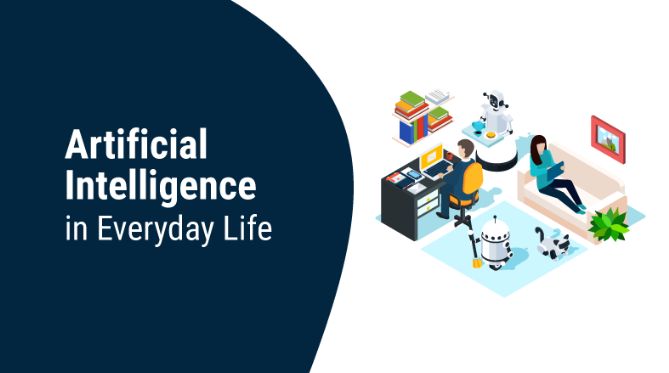
A few years ago, Artificial Intelligence (AI) sounded like something from science fiction movies. Today, it has become a part of our everyday lives. Whether we realize it or not, we use AI almost every day.
From unlocking our phones with Face ID to asking a voice assistant about the weather, AI works quietly in the background to make our lives easier. It helps us save time, find information quickly, and even make better decisions.
The best part is that you don’t need to be a technology expert to use AI. If you own a smartphone, shop online, or watch videos on the internet, you’re already using AI.
Let’s look at how AI is changing our daily lives in simple ways.
What Is Artificial Intelligence?
Artificial Intelligence is a type of technology that allows computers and machines to perform tasks that usually need human intelligence.
AI can:
- Learn from data
- Understand simple language
- Recognize faces and voices
- Suggest useful information
- Solve problems
- Make predictions
Unlike humans, AI doesn’t think or feel emotions. It works by learning patterns from large amounts of information and giving results based on that learning.
AI in Smartphones
Your smartphone is one of the best examples of AI.
Every day, AI helps you in many ways, such as:
- Unlocking your phone using Face ID or fingerprint recognition.
- Improving photo quality automatically.
- Correcting spelling while you type.
- Suggesting replies to messages.
- Blocking spam calls.
- Saving battery by managing apps.
These features make smartphones smarter and easier to use.
AI in Online Shopping
Have you ever noticed that shopping websites recommend products you might like?
That’s AI at work.
It studies your browsing and shopping habits to suggest products that match your interests.
AI also helps online stores by:
- Showing related products
- Tracking orders
- Answering customer questions through chatbots
- Detecting suspicious transactions
This makes online shopping faster and more convenient.
AI in Education
Students are using AI more than ever before.
AI can help with:
- Explaining difficult topics
- Solving practice questions
- Learning new languages
- Improving writing
- Creating study plans
- Preparing for exams
However, AI should be used as a learning assistant—not as a replacement for understanding concepts yourself.
Teachers still play the most important role in guiding and inspiring students.
AI in Healthcare
Doctors and hospitals are also using AI to improve patient care.
AI helps by:
- Analyzing medical reports
- Supporting disease detection
- Organizing hospital records
- Monitoring patients
- Assisting medical research
Even with these advances, doctors make the final medical decisions. AI is there to support them, not replace them.
AI in Banking
Many banks use AI to make banking safer and easier.
Examples include:
- Detecting fraud
- Sending alerts for unusual transactions
- Answering customer questions
- Helping with budgeting
- Improving online banking security
AI helps banks provide faster and more secure services.
AI in Navigation
When you use a navigation app to avoid traffic, AI is working behind the scenes.
It can:
- Find the fastest route
- Estimate your arrival time
- Suggest alternate roads
- Warn about traffic jams
This helps people save time and fuel.
AI in Entertainment
AI also makes entertainment more enjoyable.
Streaming platforms recommend movies, TV shows, and music based on what you’ve watched or listened to before.
Instead of searching for hours, AI helps you discover content that matches your interests.
AI in Smart Homes
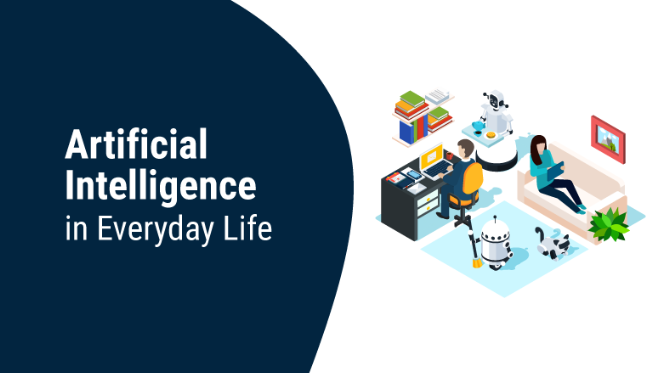
Many homes now use AI-powered devices.
These include:
- Smart speakers
- Smart lights
- Security cameras
- Robot vacuum cleaners
These devices can be controlled using voice commands or mobile apps, making everyday tasks simpler.
Benefits of AI
AI offers many advantages in daily life.
Some of the biggest benefits are:
- Saves time
- Makes work easier
- Improves productivity
- Provides quick information
- Enhances security
- Helps people learn new skills
- Supports better decision-making
When used wisely, AI can improve both personal and professional life.
Challenges of AI
Like every technology, AI also has some challenges.
These include:
- Privacy concerns
- Incorrect information
- Overdependence on technology
- Job changes in some industries
- Data security risks
That is why AI should always be used responsibly, with human judgment and careful thinking.
The Future of AI
AI is improving every year.
In the future, we may see:
- Smarter personal assistants
- Better healthcare tools
- Faster language translation
- More advanced self-driving technology
- Improved online learning
- Better customer support
AI will continue to grow, but people will still be needed for creativity, emotions, leadership, and important decisions.
Frequently Asked Questions
What is AI in daily life?
AI in daily life means using artificial intelligence in everyday activities like using smartphones, shopping online, learning, banking, and navigation.
Is AI useful?
Yes. AI helps save time, improves productivity, and makes many daily tasks easier.
Can AI replace humans?
No. AI can assist with many tasks, but it cannot replace human creativity, emotions, ethics, or life experience.
Why should we learn about AI?
Understanding AI helps us use technology wisely, improve our skills, and prepare for future careers.
Conclusion
Artificial Intelligence is no longer just a technology of the future—it is already part of our everyday lives. From the moment we unlock our phones in the morning to the time we watch a movie at night, AI quietly helps us complete many daily tasks.
The key is to use AI as a helpful tool, not to depend on it for everything. Human intelligence, creativity, and decision-making will always remain important. When people and AI work together, they can achieve better results than either could alone.
As AI continues to evolve, learning how to use it responsibly will become one of the most valuable skills for the future.
Also See Related Article AI Scams Explained: How Criminals Use Artificial Intelligence to Trick People and How You Can Stay Safe, AI vs Human: Can Artificial Intelligence Replace Human Intelligence?, What Is an eSIM? Everything You Need to Know About Digital SIM Technology