Can AI Take Over Jobs in the IT Sector? The Truth Every Tech Professional Should Know
Artificial Intelligence (AI) has become one of the biggest topics in the technology industry. New AI tools can write code, generate reports, test software, create designs, and even answer customer questions in seconds. As these tools become more advanced, many IT professionals are asking the same question: Can AI take over jobs in the IT sector?
The honest answer is not completely.
AI is changing the way people work, but it is not replacing the entire IT workforce. Instead, it is changing job roles, automating repetitive tasks, and creating demand for new skills. Professionals who learn how to work with AI are likely to have better career opportunities than those who ignore it.
Why People Think AI Will Replace IT Jobs
AI tools have improved rapidly over the last few years. Today, they can:
- Write computer code.
- Find bugs in software.
- Generate technical documents.
- Create websites.
- Answer customer support questions.
- Analyze data.
- Automate repetitive office work.
These abilities have made many employees worry that companies will need fewer workers in the future.
While AI can perform many tasks quickly, there is an important difference between completing a task and managing an entire project.
What AI Can Do Well
AI is excellent at handling repetitive and data-driven work.
For example, it can:
- Generate sample code.
- Suggest code improvements.
- Write unit tests.
- Summarize documentation.
- Translate programming languages.
- Detect common coding errors.
- Create reports.
- Analyze large datasets.
These tasks save developers time and allow them to focus on solving more complex problems.
What AI Cannot Fully Replace
Despite its capabilities, AI has important limitations.
It cannot fully replace:
- Critical thinking.
- Business decision-making.
- Leadership.
- Team collaboration.
- Understanding customer needs.
- Ethical judgment.
- Creative problem-solving.
- Project ownership.
Software development is more than writing code. Developers work with clients, understand business requirements, review designs, make trade-offs, and solve unexpected challenges. These responsibilities still require human expertise.
Which IT Jobs May Change the Most?
Some roles are more likely to be affected by AI than others.
Jobs involving repetitive tasks may see the biggest changes, such as:
- Basic data entry
- Routine software testing
- Simple technical support
- Basic content creation
- Manual documentation
This does not necessarily mean these jobs will disappear. Instead, professionals in these roles may need to learn new skills and work alongside AI tools.
IT Jobs Likely to Remain in High Demand
Many technology roles are expected to continue growing because they require creativity, communication, and strategic thinking.
Examples include:
- Software Engineers
- Cloud Engineers
- Cybersecurity Specialists
- AI Engineers
- Data Scientists
- DevOps Engineers
- Product Managers
- Solution Architects
- UX Designers
- IT Consultants
These professionals solve complex problems that go beyond what AI can currently handle on its own.
AI Is Creating New Career Opportunities
While AI is changing some jobs, it is also creating new ones.
Growing career paths include:
- AI Engineer
- Machine Learning Engineer
- Prompt Engineer
- AI Product Manager
- Data Engineer
- AI Ethics Specialist
- Automation Consultant
- AI Security Analyst
As organizations adopt AI, they need skilled professionals to build, monitor, and improve these systems.
How IT Professionals Can Stay Relevant
Instead of fearing AI, technology professionals can learn to use it effectively.
Here are some practical steps:
Learn AI Tools
Become familiar with AI coding assistants, automation platforms, and productivity tools.
Strengthen Programming Skills
A solid understanding of programming fundamentals remains valuable even when AI generates code.
Improve Problem-Solving
Companies value professionals who can solve business problems, not just write code.
Build Communication Skills
Explaining technical ideas clearly is an important skill that AI cannot replace.
Keep Learning
Technology changes quickly. Continuous learning helps professionals adapt to new tools and industry trends.
Will Freshers Face More Competition?
Entry-level roles may become more competitive because AI can automate some basic tasks that junior employees traditionally handled.
However, fresh graduates who understand AI, cloud computing, cybersecurity, and software engineering fundamentals can still find excellent opportunities.
Employers increasingly value candidates who know how to use AI responsibly rather than those who avoid it.
AI Should Be Seen as a Tool
History shows that new technologies often change the nature of work rather than eliminate it completely.
Calculators did not replace mathematicians.
Spreadsheets did not replace accountants.
The internet did not replace teachers.
Similarly, AI is unlikely to replace skilled IT professionals. Instead, it is becoming another powerful tool that helps them work faster and more efficiently.
Frequently Asked Questions
Can AI completely replace software developers?
No. AI can assist with coding and testing, but human developers are still needed for system design, problem-solving, collaboration, and decision-making.
Which IT jobs are safest from AI?
Roles involving architecture, cybersecurity, cloud engineering, AI development, leadership, and complex software design are generally less likely to be fully automated.
Should students still choose computer science?
Yes. Computer science remains a valuable field, especially for students willing to learn AI, cloud computing, cybersecurity, and modern software development practices.
Is AI creating new jobs?
Yes. AI has created demand for careers such as AI engineering, machine learning, data science, AI governance, and automation consulting.
Conclusion
Artificial Intelligence is reshaping the IT industry, but it is not replacing the need for skilled professionals. Instead of eliminating all jobs, AI is automating repetitive tasks and allowing people to focus on creativity, innovation, and complex problem-solving.
For IT professionals, the future is not about competing with AI—it is about learning how to work with it. Those who continuously upgrade their skills, embrace new technologies, and combine technical knowledge with human judgment will remain valuable in an AI-driven world.
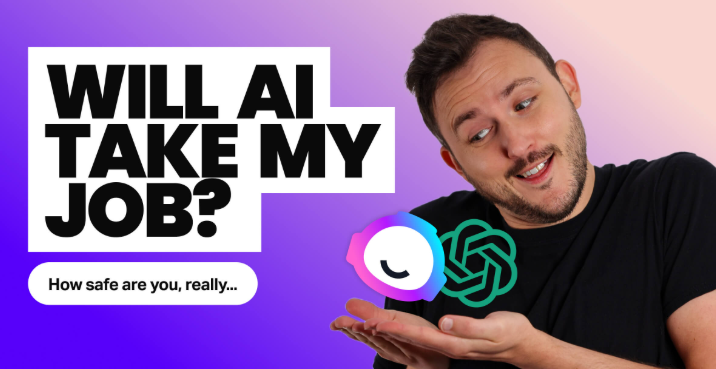
Rather than asking, “Will AI take my job?”, a better question is, “How can I use AI to become better at my job?” The answer to that question may define the future of every IT career.
Also See Related Article AI vs Human: Can Artificial Intelligence Replace Human Intelligence?, AI Scams Explained: How Criminals Use Artificial Intelligence to Trick People and How You Can Stay Safe, AI in Daily Life: How Artificial Intelligence Is Making Our Everyday Life Easier