

Justice Amy Coney Barrett Reveals Growing Threats Against U.S. Judges, Calls for Stronger Security Measures
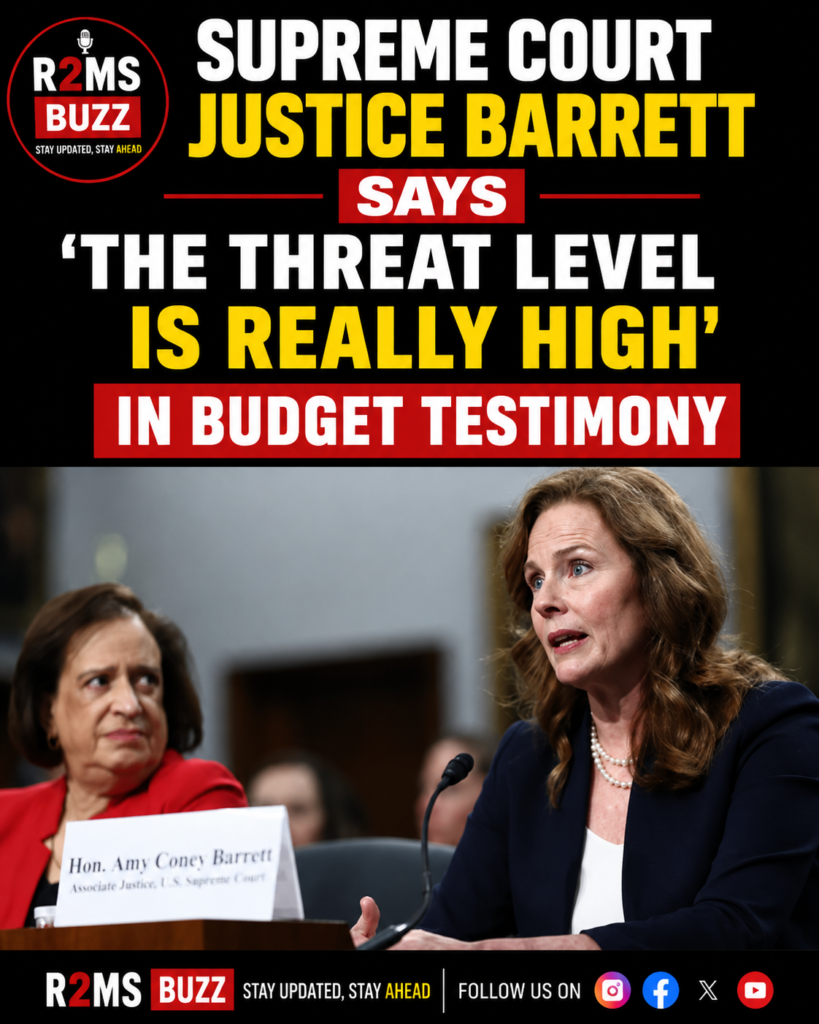
The growing number of threats against members of the United States judiciary has become a major concern, with Supreme Court Justice Amy Coney Barrett revealing deeply personal experiences that highlight the dangers faced by federal judges today. While appearing before a House Appropriations Subcommittee to discuss the Supreme Court’s Fiscal Year 2027 budget request, Barrett spoke candidly about how security threats have affected not only her professional life but also her family.
Joined by fellow Justice Elena Kagan, Barrett described the emotional impact of living under constant security concerns, sharing incidents involving death threats, a bulletproof vest, anonymous intimidation attempts, and a recent “swatting” attack at her home.
Her testimony comes amid a significant increase in threats targeting members of the federal judiciary, prompting the Supreme Court to seek additional funding for enhanced security measures.
Supreme Court Seeks Increased Security Funding
Justice Barrett appeared before the House Appropriations Subcommittee on Financial Services and General Government as part of the Supreme Court’s annual budget request.
The Court has requested $228.4 million for Fiscal Year 2027, representing nearly a 10 percent increase compared with the $207.8 million allocated for Fiscal Year 2026.
According to court officials, much of the additional funding would be directed toward improving security for Supreme Court justices, federal judges, court employees, and judicial facilities.
The request reflects growing concerns about threats, harassment, and intimidation directed at members of the judiciary across the United States.
Barrett Says Threat Level Is “Really High”
During her testimony, Justice Barrett warned lawmakers that threats against federal judges have reached alarming levels.
She stressed that statistics alone fail to capture the emotional and psychological toll experienced by judges and their families.
According to Barrett, the threats have forced her children to confront situations that no child should have to experience.
She explained that while serving on the nation’s highest court is an honour, she never imagined that the position would expose her family to serious security risks.
Her remarks highlighted the human side of judicial service, emphasizing that judges and their loved ones also live with the consequences of public hostility.
A Bulletproof Vest at Home
One of the most emotional moments of Barrett’s testimony came when she described an incident from spring 2022.
Following the leak of a draft Supreme Court opinion that later led to the reversal of Roe v. Wade, threats against several justices intensified dramatically.
As a precaution, Barrett’s security team provided her with a bulletproof vest.
She recalled bringing the vest into her home and placing it in her bedroom before her 12-year-old son noticed it and asked what it was.
The justice admitted she struggled to explain why she needed protective equipment simply because of her work.
She said she never expected her judicial responsibilities would require explaining life-threatening dangers to her children.
Family Impact Beyond the Courtroom
Barrett emphasized that security threats extend far beyond court buildings.
She said the emotional burden often follows judges home, affecting spouses, children, and everyday family life.
Simple activities such as leaving the house, attending school events, or spending time outdoors may require additional security precautions.
According to Barrett, these experiences have fundamentally changed how her family views personal safety.
She noted that children should not have to worry about issues such as death threats or personal protection because of a parent’s profession.
Swatting Incident Adds to Security Concerns
Justice Barrett also disclosed that her family recently became the target of a swatting attack.
Swatting involves making a false emergency report to law enforcement with the intention of triggering an armed police response at someone’s home.
Barrett explained that one of her teenage sons opened the front door while leaving with friends and found numerous police vehicles surrounding their neighbourhood.
Police officers had responded after receiving a false report claiming there were gunshots and disturbances inside the Barrett family home.
Fortunately, Supreme Court Police stationed outside the residence quickly informed local officers that the emergency call was false.
As a result, law enforcement did not attempt to forcibly enter the home.
The incident nevertheless demonstrated the risks associated with malicious false emergency calls.
Anonymous Threats Continue
In addition to physical security concerns, Barrett revealed that members of the Supreme Court have also received anonymous packages designed to intimidate them.
She said such deliveries are intended to create fear and psychological pressure.
Although she did not discuss specific contents, Barrett indicated that these incidents have become another aspect of the increasingly hostile environment surrounding federal judges.
Security officials continue monitoring these threats while strengthening protective measures for members of the judiciary.
Justice Elena Kagan Appears Alongside Barrett
Justice Elena Kagan joined Barrett during the congressional hearing.
The appearance marked the first time Supreme Court justices had testified before Congress since 2019.
At that time, Justice Kagan and Justice Samuel Alito had appeared before lawmakers to discuss judicial funding and court operations.
The latest testimony focused largely on growing security concerns alongside the Supreme Court’s financial requirements.
Rising Threats Against Federal Judges
The concerns expressed by Barrett are supported by official figures released by the U.S. Marshals Service.
According to the agency:
- 512 investigations involving threats against federal judges had already been opened during 2026.
- During the entirety of 2025, authorities investigated 807 threats.
Officials say the number of reported threats has increased substantially over recent years.
These investigations involve threats delivered through letters, emails, social media, telephone calls, suspicious packages, and other means.
Security agencies continue working to identify individuals responsible for threatening judges across the country.
Why Judicial Security Matters
An independent judiciary forms one of the foundations of democratic governance.
Judges are expected to make decisions based solely on the Constitution and the law without fear of intimidation or violence.
Legal experts say protecting judges is essential because:
- It preserves judicial independence.
- It ensures fair trials.
- It protects constitutional governance.
- It strengthens public confidence in the justice system.
Threats against judges therefore affect not only individuals but also the broader rule of law.
Growing Challenges in the Digital Age
Modern technology has created new challenges for judicial security.
Social media platforms allow threats to spread rapidly.
Personal information can sometimes become publicly available online, increasing security risks.
False emergency reports, online harassment, anonymous emails, and coordinated intimidation campaigns have become increasingly common.
Security agencies continue adapting to these evolving threats.
Congress to Consider Budget Request
Lawmakers will now examine the Supreme Court’s proposed $228.4 million budget before deciding on future appropriations.
The requested increase primarily reflects higher spending on:
- Personal security
- Court security
- Protective personnel
- Technology upgrades
- Threat investigations
- Emergency response capabilities
Congressional committees are expected to review these proposals during the federal budget process.
Balancing Transparency and Security
While the judiciary remains committed to transparency, increasing security concerns have forced courts to balance public access with personal protection.
Courthouses across the United States have expanded security procedures in recent years.
Additional protective measures may continue as threat levels evolve.
Officials stress that judicial accessibility should not come at the expense of personal safety.
Conclusion
Justice Amy Coney Barrett’s testimony before Congress has drawn national attention to the growing dangers faced by members of the federal judiciary. Her personal account of receiving a bulletproof vest, experiencing a swatting incident, and protecting her children from security threats illustrates that judicial service today involves challenges extending well beyond the courtroom.
As threats against judges continue to rise, the Supreme Court’s request for additional security funding reflects an effort to safeguard those responsible for interpreting and upholding the law. Whether through increased protection, improved technology, or stronger law enforcement coordination, ensuring the safety of judges remains essential to preserving judicial independence and maintaining public confidence in the American legal system.
Frequently Asked Questions (FAQs)
1. Why did Justice Amy Coney Barrett testify before Congress?
She appeared before a House Appropriations Subcommittee to discuss the Supreme Court’s Fiscal Year 2027 budget request, including increased funding for judicial security.
2. What security incidents did Barrett describe?
She spoke about receiving a bulletproof vest after death threats, a swatting attack at her home, and anonymous threatening deliveries.
3. Why is the Supreme Court seeking a larger budget?
The Court requested $228.4 million for Fiscal Year 2027, with much of the increase intended for enhanced security measures.
4. How many threats against federal judges have been investigated recently?
According to the U.S. Marshals Service, 512 threat investigations had already been opened in 2026, compared with 807 investigations throughout 2025.
5. Why is judicial security important?
Protecting judges helps preserve judicial independence, ensures fair decision-making, and strengthens public confidence in the rule of law.