
Live: US launches fresh strikes as Iran closes Strait of Hormuz
The fragile calm that briefly emerged between the United States and Iran has once again given way to military confrontation, pushing the Middle East into another dangerous phase of instability. Fresh U.S. airstrikes against Iranian targets, Tehran’s renewed declaration that the Strait of Hormuz is closed, and attacks affecting commercial shipping have dramatically heightened concerns about regional security and the global economy.
The latest exchange follows an attack on a Cyprus-flagged container ship traveling through the Strait of Hormuz, one of the world’s busiest maritime trade routes. The vessel sustained severe damage, an onboard fire broke out, and one civilian crew member remains missing, according to U.S. officials.
As diplomatic efforts struggle to gain momentum, governments across the Gulf are strengthening air defenses while energy markets react nervously to the renewed uncertainty.
Commercial Ship Attack Sparks New Military Response
According to the U.S. Central Command, the latest military operation was launched after Iranian forces allegedly targeted the M/V GFS Galaxy, a commercial container vessel passing through the Strait of Hormuz.
Officials said the attack caused extensive damage to the ship’s engine room, leaving the vessel unable to continue its voyage. Crew members abandoned the ship in lifeboats after fire spread onboard, while search efforts continue for one missing civilian sailor.
Washington described the attack as another violation of commitments aimed at protecting international shipping in one of the world’s most strategically important waterways.
US Expands Military Operations
Following the maritime incident, U.S. forces carried out another wave of strikes targeting Iranian military infrastructure.
American officials said the operation focused on facilities linked to missile systems, drones, naval assets, surveillance equipment and command centers believed to support attacks on commercial shipping. Earlier rounds of strikes this week also targeted dozens of small Revolutionary Guard naval craft operating near the Strait of Hormuz.
President Donald Trump declared that the previous ceasefire arrangement had effectively collapsed, although he indicated that diplomacy remained possible if Iran altered its approach.
Iran Declares Strait of Hormuz Closed
Tehran responded by once again announcing the closure of the Strait of Hormuz.
Iranian authorities claimed one commercial vessel had ignored an “unauthorized route” and said a warning shot had struck the ship. Officials warned that any further military action against Iran would be met with what they described as a “severe response.”
Although the United States says commercial navigation has continued despite Iran’s declaration, the renewed threat has significantly increased security concerns for international shipping companies.
Why the Strait of Hormuz Matters
Few waterways carry as much economic importance as the Strait of Hormuz.
Roughly one-fifth of the world’s seaborne oil and liquefied natural gas exports move through this narrow passage connecting the Persian Gulf with the Gulf of Oman and the Arabian Sea. Any disruption immediately attracts attention from governments, investors and energy companies worldwide.
Even temporary interruptions can affect fuel prices, insurance costs for shipping companies and global supply chains.
Energy analysts warn that prolonged instability could increase transportation expenses and place additional inflationary pressure on economies already facing elevated costs.
Gulf Nations Activate Air Defenses
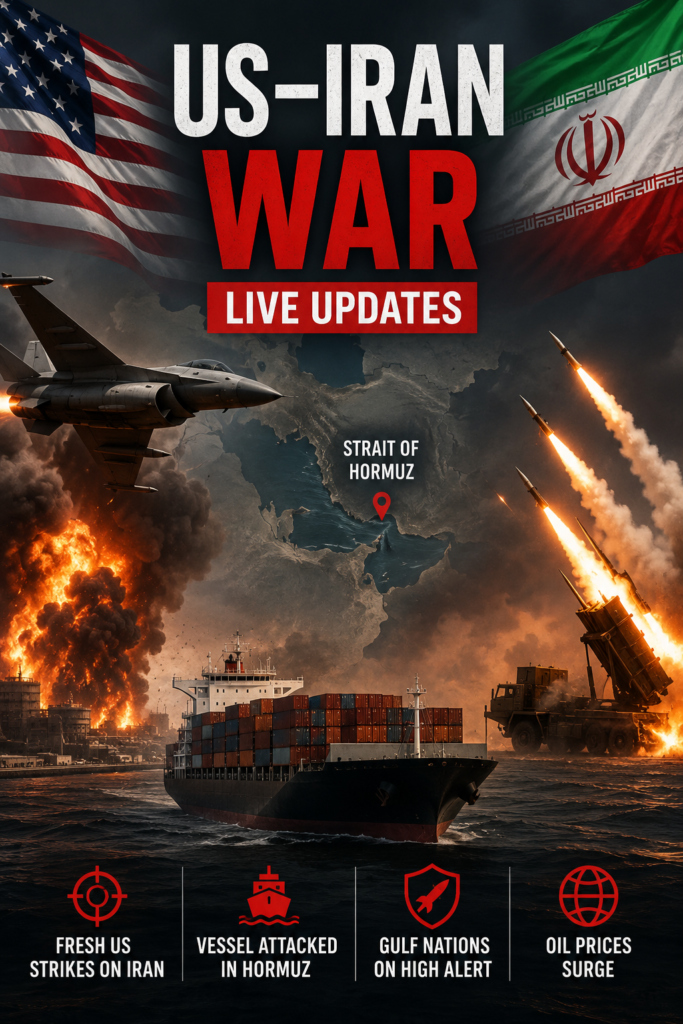
The conflict is no longer confined to the waters of the Persian Gulf.
Authorities in the United Arab Emirates, Qatar, Bahrain and Kuwait activated missile defense systems after reports of Iranian missile and drone launches targeting military facilities across the region.
Several countries issued temporary airspace warnings while defense forces monitored incoming threats.
Governments have not reported widespread civilian casualties, but the heightened security posture reflects growing fears that the confrontation could spread beyond Iran and the United States.
Jordan Also Drawn Into the Crisis
Iran’s Islamic Revolutionary Guard Corps claimed responsibility for striking what it described as command facilities and drone infrastructure at a military installation in Jordan.
Jordan has long been considered one of Washington’s closest security partners in the Middle East, making the claim particularly significant.
Independent assessments of the reported damage remain limited, but the announcement highlights the increasingly regional nature of the confrontation.
Diplomatic Efforts Continue Despite Escalation
Despite the latest military exchanges, diplomatic channels have not completely closed.
Iranian Foreign Minister Abbas Araqchi accused Washington of violating the previous ceasefire understanding while arguing that lasting peace would require both sides to respect mutual commitments.
Regional governments, including Pakistan and Saudi Arabia, have urged restraint and renewed negotiations to prevent further escalation.
International observers continue to warn that a prolonged conflict would carry consequences far beyond the Middle East, affecting energy security, trade and financial markets.
Humanitarian and Economic Concerns Grow
Beyond the military dimension, humanitarian organizations are expressing concern over the risks facing civilians, merchant sailors and communities living near potential conflict zones.
Commercial shipping companies are reviewing sailing routes through the Gulf, while insurers continue evaluating increased risks associated with maritime operations.
Financial markets also reacted to the renewed tensions, with energy prices climbing as traders weighed the possibility of longer-term disruptions to global oil supplies.
What Happens Next?
Military analysts believe the coming days will be critical.
If additional commercial vessels come under attack, Washington could expand its military operations further. Conversely, renewed diplomatic engagement could help reduce immediate tensions, although recent developments have complicated negotiations.
For now, governments across the region remain on high alert as naval forces continue monitoring one of the world’s most important maritime corridors.
Conclusion
The latest exchange of military strikes between the United States and Iran marks another serious escalation in an already volatile confrontation. With attacks on commercial shipping, renewed claims that the Strait of Hormuz is closed, missile alerts across Gulf states and continued military operations, the risk of broader regional instability has grown substantially.
At the same time, diplomatic efforts have not disappeared entirely. Whether those negotiations can succeed before another major incident occurs may determine not only the future of U.S.-Iran relations but also the stability of global energy markets in the weeks ahead.
Frequently Asked Questions
Why is the Strait of Hormuz important?
It carries around 20% of the world’s seaborne oil and LNG exports, making it one of the most important trade routes globally.
Why did the U.S. launch new strikes?
U.S. officials said the strikes were a response to the attack on a commercial container ship in the Strait of Hormuz.
Has Iran officially closed the Strait of Hormuz?
Iran announced that it had closed the strait, although the United States says commercial traffic has continued despite the declaration.
How could this affect oil prices?
Any disruption to shipping through the Strait of Hormuz can tighten global energy supplies and push oil prices higher.