
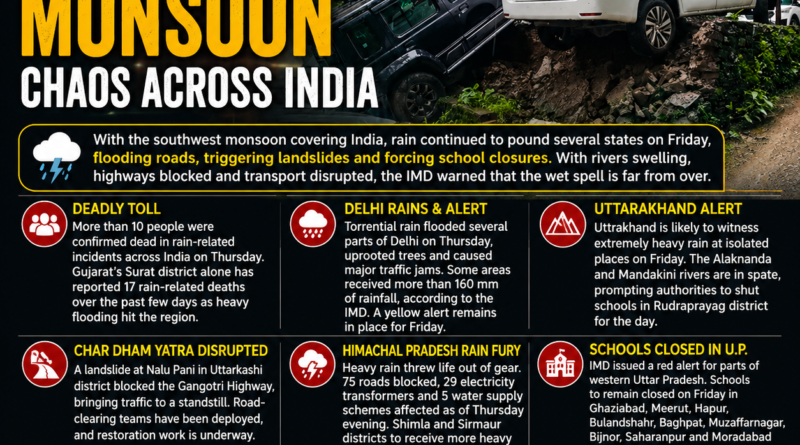
Massive Landslide Damages Vehicles in Hill Town: Heavy Rain Triggers Fresh Safety Concerns
The ongoing monsoon season has once again highlighted the dangers of living and travelling through India’s hilly regions after a landslide caused significant damage to parked vehicles in a residential area. Images from the incident show two vehicles precariously balanced on debris after a retaining wall collapsed, underlining the destructive force of continuous rainfall and unstable terrain.
Fortunately, there have been no confirmed reports of fatalities in connection with the incident, but the accident has renewed discussions about infrastructure safety, urban planning in hill stations, and the increasing frequency of rain-induced disasters across India.
As monsoon showers continue to intensify in several states, authorities are urging residents and tourists to remain alert, avoid vulnerable locations, and strictly follow weather advisories.
Heavy Rain Weakens Hillside
According to initial reports, the collapse appears to have been triggered by prolonged rainfall that saturated the soil surrounding the residential complex. Excess water gradually weakened the retaining structure before a section of the hillside gave way.
The landslide caused a portion of the parking area to collapse, leaving vehicles hanging over broken concrete and debris. Photographs from the scene show one SUV partially suspended while another vehicle became trapped after the ground beneath it gave way.
Incidents like these are becoming increasingly common during the monsoon season, particularly in regions where steep slopes, aging retaining walls, and heavy rainfall combine to create dangerous conditions.
Vehicles Sustain Major Damage
Although the full assessment is still underway, both vehicles involved in the incident appear to have suffered structural damage.
The collapse affected not only the parked vehicles but also nearby property, creating concern among residents living in the surrounding buildings. Authorities quickly cordoned off the area to prevent additional accidents while engineers began inspecting the stability of the remaining structures.
Recovery teams are expected to remove the damaged vehicles only after experts confirm that the hillside is safe enough for heavy machinery to operate.
Residents Describe Moments of Panic
People living inside the residential complex reported hearing a loud cracking sound moments before the retaining wall collapsed.
Many residents rushed outside after feeling vibrations and discovering that part of the parking area had disappeared beneath the vehicles. Several residents immediately informed local emergency services, fearing additional landslides if the rain continued.
Thankfully, preliminary information suggests that no one was inside the vehicles when the collapse occurred.
Monsoon Season Brings Fresh Challenges
Every year, India’s monsoon delivers much-needed rainfall that supports agriculture, replenishes reservoirs, and boosts groundwater levels. However, intense rainfall also creates serious risks in mountainous regions.
Continuous rain loosens soil, increases water pressure beneath slopes, and weakens retaining walls. When these structures fail, roads, homes, bridges, and parking areas can collapse with little warning.
States across northern and northeastern India frequently experience landslides during the rainy season, affecting transportation, tourism, and daily life.
Why Retaining Walls Fail
Retaining walls are constructed to stabilize slopes and prevent soil movement. However, they require proper engineering, drainage systems, and regular maintenance.
Several factors can contribute to failure:
- Poor drainage behind the wall
- Continuous heavy rainfall
- Weak foundation
- Soil erosion
- Aging construction
- Unauthorized excavation nearby
- Increased load due to construction
When water accumulates behind a retaining wall without adequate drainage, pressure builds rapidly, eventually causing structural failure.
Experts Stress Better Urban Planning
Urban planners have repeatedly emphasized the need for safer construction practices in hill towns.
Rapid urban development has increased pressure on fragile mountain ecosystems. In many locations, buildings have been constructed on steep slopes that were never designed to support dense residential development.
Experts recommend:
- Detailed geological surveys before construction
- Strong retaining structures
- Efficient rainwater drainage
- Regular safety inspections
- Controlled hillside development
- Continuous monitoring during monsoon
Such measures can significantly reduce the likelihood of landslide-related accidents.
Authorities Increase Monitoring
Following the incident, local authorities have reportedly begun assessing nearby retaining walls and vulnerable slopes to identify potential risks.
Disaster management teams often conduct inspections after similar incidents to determine whether additional evacuations or safety measures are necessary.
Residents living near steep slopes are generally advised to remain alert for warning signs, including:
- New cracks in walls or roads
- Tilting trees or electric poles
- Water seepage from hillsides
- Unusual sounds from the ground
- Sudden movement of soil or rocks
Early reporting of these warning signs can help prevent larger disasters.
Safety Tips During the Monsoon
The incident serves as an important reminder that heavy rainfall can create dangerous conditions within minutes.
Residents and travellers can reduce their risk by following basic precautions:
- Avoid parking vehicles near retaining walls during prolonged rain.
- Stay away from steep slopes showing visible cracks.
- Follow weather alerts issued by the India Meteorological Department (IMD).
- Do not drive through landslide-prone roads during heavy rainfall.
- Keep emergency contacts readily available.
- Move to safer locations if authorities issue evacuation notices.
Preparedness remains one of the most effective ways to minimize loss during natural disasters.
Impact on Tourism
Many hill stations experience a surge in visitors during the monsoon because of lush greenery and cooler temperatures. However, authorities often remind tourists that the rainy season also increases the likelihood of landslides, road closures, and falling rocks.
Travellers planning trips to mountainous destinations should monitor weather forecasts, check road conditions, and avoid unnecessary travel during periods of intense rainfall.
Hotels and local administrations also play a crucial role in informing guests about weather-related risks and emergency procedures.
Climate Change and Extreme Rainfall

Climate experts have observed that extreme rainfall events are becoming more frequent in many parts of India. While individual incidents cannot always be directly linked to climate change, scientists agree that warming temperatures are contributing to changes in rainfall intensity and weather patterns.
As rainfall becomes increasingly unpredictable, infrastructure designed decades ago may no longer be sufficient to withstand today’s extreme weather conditions.
Strengthening drainage systems, improving slope stabilization, and investing in resilient infrastructure will become increasingly important in reducing future risks.
Community Preparedness Matters
Natural disasters often test the resilience of local communities. Quick action by residents, emergency responders, engineers, and disaster management officials can significantly reduce casualties and property damage.
Public awareness campaigns, regular infrastructure inspections, and emergency response planning should remain priorities, especially in regions vulnerable to landslides during the monsoon season.
Conclusion
The recent landslide that damaged parked vehicles is another reminder of the risks posed by heavy monsoon rainfall in India’s hill regions. While no major injuries have been reported, the collapse highlights the importance of infrastructure maintenance, responsible urban planning, and timely disaster preparedness.
As rains continue across many parts of the country, authorities are encouraging residents to remain cautious, follow official weather advisories, and report any signs of unstable slopes immediately. With better planning and increased public awareness, the impact of such incidents can be reduced in the future.