
Mumbai Train Bombings 2006
Mumbai Train Bombings 2006: Remembering the Day Terror Struck Mumbai’s Lifeline
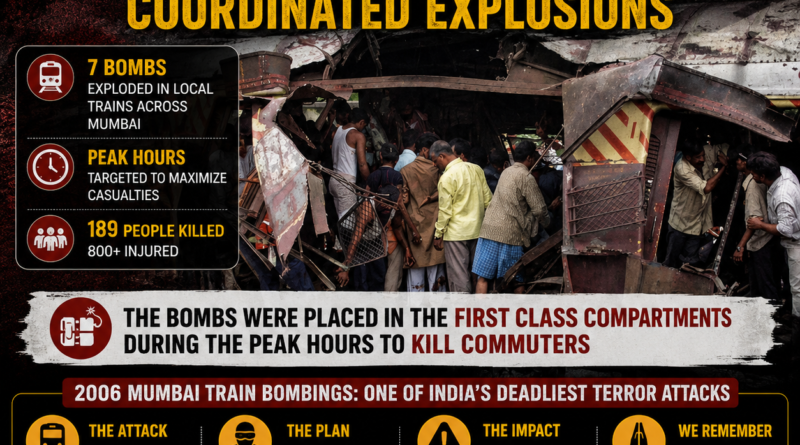
On July 11, 2006, India witnessed one of the darkest chapters in its history when a series of coordinated bomb blasts ripped through Mumbai’s suburban railway network during the evening rush hour. The attacks targeted the city’s busiest transportation system, claiming the lives of 189 people and injuring more than 800 others, according to official figures.
Every year, July 11 serves as a solemn reminder of the innocent lives lost, the bravery of first responders, and the remarkable resilience displayed by the people of Mumbai. Often referred to as the 7/11 Mumbai Train Bombings, the incident remains one of the deadliest terrorist attacks ever carried out on India’s public transport system.
Two decades later, the memories remain vivid for survivors, victims’ families, emergency workers, and millions of Indians who witnessed the tragedy unfold.
What Happened on July 11, 2006?
On the evening of July 11, 2006, seven powerful explosions occurred within approximately eleven minutes on Mumbai’s Western Railway suburban line.
The bombs were reportedly placed inside first-class compartments of crowded local trains during peak commuting hours. The coordinated nature of the attacks suggested careful planning, with multiple trains being targeted almost simultaneously.
The explosions occurred between approximately 6:24 PM and 6:35 PM, creating panic across Mumbai’s extensive suburban rail network.
Within moments, railway stations turned into scenes of devastation as passengers attempted to rescue victims trapped inside damaged train coaches.
Communication systems became overloaded while emergency services rushed to multiple locations across the city simultaneously.
Why Mumbai’s Local Trains Were Targeted
Mumbai’s suburban railway system is widely regarded as the city’s lifeline.
Every day, millions of commuters depend on local trains to travel between home and work. Targeting this network meant disrupting the daily life of India’s financial capital while maximizing casualties during one of the busiest hours of the day.
Investigators later concluded that the attackers selected first-class compartments because they were densely occupied during office closing hours.
The attacks not only caused tragic loss of life but also sought to spread fear among ordinary citizens using public transportation.
Scale of the Tragedy
The human cost of the attacks was enormous.
According to official records:
- 189 people lost their lives
- More than 800 people were injured
- Hundreds of families were permanently affected
- Numerous survivors suffered lifelong physical and psychological trauma
Hospitals across Mumbai immediately activated emergency protocols to treat the large number of injured passengers.
Doctors, nurses, volunteers, blood donors, and ordinary citizens worked through the night to assist victims.
Courage in the Midst of Chaos
While the bombings brought unimaginable suffering, they also revealed extraordinary acts of humanity.
Local residents rushed to the blast sites before emergency teams arrived. Taxi drivers transported injured passengers to hospitals without charging fares. Shopkeepers offered food, water, and shelter to stranded commuters.
Railway staff, police personnel, firefighters, and medical professionals worked tirelessly under extremely difficult conditions to rescue survivors.
Many ordinary citizens risked their own safety to help strangers trapped inside damaged train compartments.
These selfless acts became powerful examples of Mumbai’s resilience and compassion.
Investigation Into the Attack
Following the bombings, multiple Indian investigative agencies launched one of the country’s largest counter-terrorism investigations.
Investigators collected forensic evidence, examined blast sites, questioned witnesses, and analyzed intelligence inputs to identify those responsible.
Over the following months and years, several individuals were arrested and prosecuted in connection with the attacks.
The investigation involved coordination between state police, central agencies, forensic experts, and intelligence organizations.
The legal process extended over several years, reflecting the complexity of the case and the need for detailed examination of evidence.
National Security After the Blasts
The Mumbai train bombings became a turning point for India’s internal security strategy.
Following the attacks, authorities introduced several measures aimed at strengthening public safety, including:
- Improved surveillance at railway stations
- Expanded use of CCTV cameras
- Enhanced intelligence sharing among agencies
- Stronger anti-terror coordination
- Better emergency response systems
- Increased security checks at major transport hubs
Although no security system can eliminate every risk, the lessons learned from the 2006 attacks significantly influenced India’s approach to protecting critical infrastructure.
The Emotional Impact on Mumbai
For Mumbai residents, July 11 remains more than a historical date.
Many families continue to remember loved ones who never returned home that evening.
Survivors often recall the confusion, fear, and courage displayed during those difficult moments.
Children who lost parents grew up carrying the emotional burden of the tragedy, while many injured passengers continue to live with permanent disabilities.
Despite immense pain, Mumbai demonstrated remarkable determination by resuming normal life soon after the attacks, symbolizing the city’s resilience against terrorism.
Honouring the Victims Every Year
Every anniversary of the attacks is marked by remembrance ceremonies across Mumbai.
Government officials, railway authorities, police personnel, survivors, and families gather to pay tribute to those who lost their lives.
Floral tributes, moments of silence, prayer meetings, and memorial events serve as reminders that the victims will never be forgotten.
These commemorations also recognize the courage of emergency responders and ordinary citizens who helped save countless lives during the crisis.
Why Remembering the 7/11 Attacks Matters
Remembering tragedies like the Mumbai train bombings serves several important purposes.
It honours the innocent victims whose lives were cut short.
It acknowledges the suffering of survivors and affected families.
It reminds society of the importance of vigilance against terrorism.
It celebrates the courage displayed by emergency workers and ordinary citizens during moments of crisis.
Most importantly, it reinforces the collective commitment to peace, unity, and the rejection of violence.
Lessons Learned
The 2006 Mumbai train bombings highlighted several critical lessons for governments and communities.
Public transport systems require continuous security upgrades.
Rapid emergency response can save lives.
Citizens play an important role in assisting authorities during crises.
National resilience depends not only on security forces but also on community solidarity.
The attacks also emphasized the importance of intelligence sharing and preparedness in preventing future threats.
Mumbai’s Spirit Remains Unbroken
Mumbai has experienced numerous challenges throughout its history, yet the city has repeatedly demonstrated extraordinary resilience.
The response to the July 11 attacks reflected the determination of its people to stand together in difficult times.
Businesses reopened, trains resumed operations, and daily life gradually returned, but the memories of those lost continue to inspire calls for peace and national unity.
The spirit shown by Mumbai’s citizens became an enduring symbol of courage in the face of adversity.
Conclusion
The Mumbai Train Bombings of July 11, 2006, remain one of the most painful chapters in India’s modern history. The coordinated explosions claimed innocent lives, injured hundreds, and left an enduring impact on countless families. Yet the tragedy also highlighted the bravery of first responders, the compassion of ordinary citizens, and the resilience of Mumbai.
As India remembers the victims each year, the focus remains on honouring those who were lost, supporting the survivors, strengthening public safety, and reaffirming a collective commitment to peace and unity. The memory of the 7/11 attacks stands as a reminder that while acts of terror can cause immense suffering, they cannot overcome the strength and solidarity of a determined nation.