
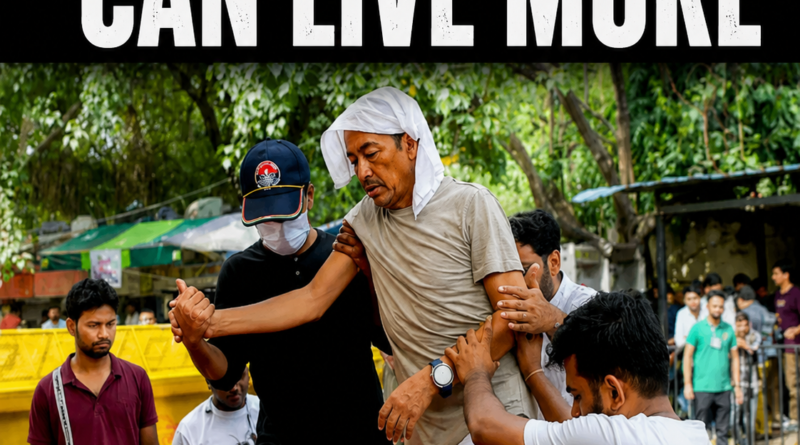
Sonam Wangchuk Hunger Strike Enters 18th Day: Delhi High Court to Hear Plea Seeking Urgent Medical Intervention
The health of renowned environmentalist and education reform activist Sonam Wangchuk has become a matter of growing concern as his indefinite hunger strike entered its 18th day. A Public Interest Litigation (PIL) has now reached the Delhi High Court, urging immediate medical intervention to protect his life.
According to the petition, Wangchuk’s health has deteriorated significantly after more than two weeks without food. The petitioner has claimed that doctors believe the activist may not survive for long if the fast continues and has urged the court to direct authorities to admit him to a government hospital and provide essential medical treatment.
The protest, centred on alleged irregularities in the NEET examination and the demand for the resignation of Union Education Minister Dharmendra Pradhan, has attracted nationwide attention. The case has now shifted from being a political protest to a humanitarian and legal issue, with the High Court expected to hear the matter urgently.
Delhi High Court Agrees to Hear the Matter
The Delhi High Court took up the Public Interest Litigation seeking urgent intervention in Sonam Wangchuk’s deteriorating health.
A Bench comprising Chief Justice D.K. Upadhyaya and Justice Tejas Karia acknowledged the urgency of the matter and scheduled the case for hearing the following day.
During the proceedings, the court observed that no representative appeared on behalf of the Union Government because of the work abstention by the High Court Bar Association.
The Bench directed the court registry to immediately communicate the order to the concerned authorities so that instructions could be obtained before the next hearing.
The High Court has not expressed any opinion on the merits of the petition and is expected to hear submissions from all parties before passing any order.
What the Petition Says
The PIL has been filed by advocate Rakesh Kumar Saini, who argues that Sonam Wangchuk’s condition has become critical after nearly three weeks of fasting.
According to the petition:
- Wangchuk has reportedly lost around 8.5 kilograms.
- His health continues to deteriorate.
- Immediate medical treatment is necessary.
- Authorities should not allow the situation to worsen further.
The petitioner requested the court to direct the government to shift Wangchuk to a government hospital where doctors could provide essential nutrition, vitamins and medical supervision through appropriate treatment.
The plea argues that preserving life must remain the highest priority.
Demand for Medical Intervention
The petition specifically seeks directions for immediate medical care.
It proposes that Wangchuk be admitted to a government hospital where doctors can administer a liquid nutritional diet if medically required.
The petitioner argues that although peaceful protest is a democratic right, the State also has a constitutional responsibility to protect the life of every citizen.
According to the plea, allowing the activist’s health to deteriorate without intervention would be unacceptable.
The court will examine these arguments during the upcoming hearing.
Why Sonam Wangchuk Is Protesting
Sonam Wangchuk joined the ongoing protest on June 28, after demonstrations had already begun under the banner of the Cockroach Janta Party (CJP).
The organisation describes itself as a youth-led political platform advocating for educational reforms.
The primary demands of the protest include:
- Greater accountability in the examination system.
- Action over alleged irregularities in the NEET examination.
- Resignation of Union Education Minister Dharmendra Pradhan.
Supporters argue that repeated controversies involving competitive examinations have affected the confidence of students across the country.
Concern Over Wangchuk’s Health
According to the petition, Wangchuk’s physical condition has weakened considerably.
The plea states that prolonged fasting has resulted in noticeable weight loss and declining health.
Medical experts generally warn that extended hunger strikes may lead to:
- Severe dehydration.
- Electrolyte imbalance.
- Organ complications.
- Muscle weakness.
- Reduced immunity.
The exact condition of Wangchuk continues to be monitored by medical professionals associated with the protest.
Petition Raises Constitutional Questions
The PIL argues that the case involves both constitutional rights and humanitarian concerns.
According to the petitioner, peaceful protest remains a fundamental democratic right guaranteed under the Constitution.
However, the petition also argues that the State cannot remain passive if the life of a citizen is at risk.
The plea asks the court to balance both constitutional principles—protecting democratic freedoms while ensuring the right to life.
Government Yet to Respond Before Court

At the initial hearing, no government representative was present before the High Court.
The Bench has now sought instructions from the concerned authorities.
The Union Government is expected to present its response during the next hearing.
At present, no official statement has been made before the court regarding the specific relief sought in the petition.
Debate Over Force-Feeding
One of the most debated aspects of the PIL concerns the request for medical intervention through nutritional support.
The petitioner has argued that if Wangchuk’s life is in immediate danger, authorities should provide medical treatment.
However, legal experts note that courts generally examine such requests carefully because they involve balancing:
- Personal autonomy.
- Right to protest.
- Medical ethics.
- Right to life.
The High Court’s decision may therefore have wider legal significance.
Protest Continues
Despite growing health concerns, the protest continues.
Supporters remain gathered at the protest site while calling for action on examination reforms.
Student groups and civil society organisations have also expressed concern regarding transparency and fairness in national competitive examinations.
The agitation has gradually drawn attention beyond the education sector because of Wangchuk’s deteriorating health.
Who Is Sonam Wangchuk?
Sonam Wangchuk is widely recognised as an engineer, education reformer and environmental activist.
He has worked extensively in Ladakh, promoting innovative education models, sustainable development and climate-friendly technologies.
Over the years, he has become one of India’s best-known public figures advocating reforms in education, ecology and community development.
His initiatives have received both national and international recognition.
Public Reaction
The hunger strike has generated widespread discussion across social media and public forums.
Supporters believe Wangchuk’s demands deserve serious attention.
Others have expressed concern primarily about his health and have appealed for a peaceful resolution through dialogue.
The ongoing court proceedings have further increased public interest in the matter.
Importance of Peaceful Protest
India’s democratic framework guarantees citizens the right to express dissent peacefully.
Many historic reforms have emerged through peaceful public movements.
However, prolonged hunger strikes often raise difficult questions regarding:
- Public health.
- Government responsibility.
- Individual rights.
- Judicial intervention.
The High Court’s upcoming hearing may address some of these constitutional concerns.
What Happens Next?
The Delhi High Court is expected to hear the matter in detail during the next hearing.
The court may consider:
- Medical reports.
- Government’s response.
- Petitioner’s arguments.
- Constitutional principles.
- Appropriate legal remedies.
Any further directions will depend on the material placed before the court.
Conclusion
The case involving Sonam Wangchuk’s 18-day hunger strike has now entered an important legal phase with the Delhi High Court agreeing to hear a plea seeking urgent medical intervention. While the protest continues over alleged irregularities in the NEET examination and demands for accountability, growing concerns about Wangchuk’s health have shifted attention toward protecting his well-being.
The court has not yet passed any substantive order, and the allegations and requests contained in the petition remain under judicial consideration. The outcome of the hearing could influence not only the immediate situation surrounding Wangchuk’s health but also broader discussions on the balance between democratic protest, constitutional rights and the State’s duty to protect life.
Frequently Asked Questions (FAQs)
1. Why is Sonam Wangchuk on a hunger strike?
He is protesting over alleged irregularities in the NEET examination and demanding greater accountability, including the resignation of Union Education Minister Dharmendra Pradhan.
2. How long has the hunger strike continued?
According to the latest reports, the hunger strike has entered its 18th day.
3. What has the Delhi High Court done?
The High Court has agreed to hear a PIL seeking urgent medical intervention and has asked the authorities to respond.
4. What does the petition seek?
The petition requests that Wangchuk be admitted to a government hospital and provided necessary medical treatment if required.
5. Has the court ordered force-feeding?
No. The court has not issued any such direction. It has only agreed to hear the matter and seek responses from the authorities.