US Announces 20% Cargo Fee for Strait of Hormuz
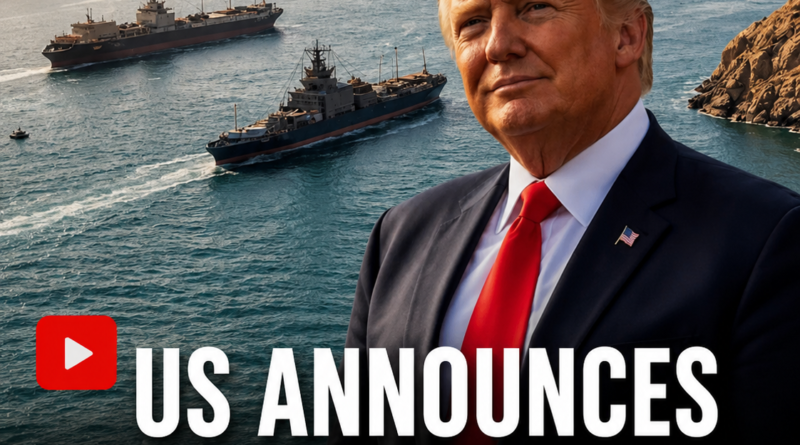
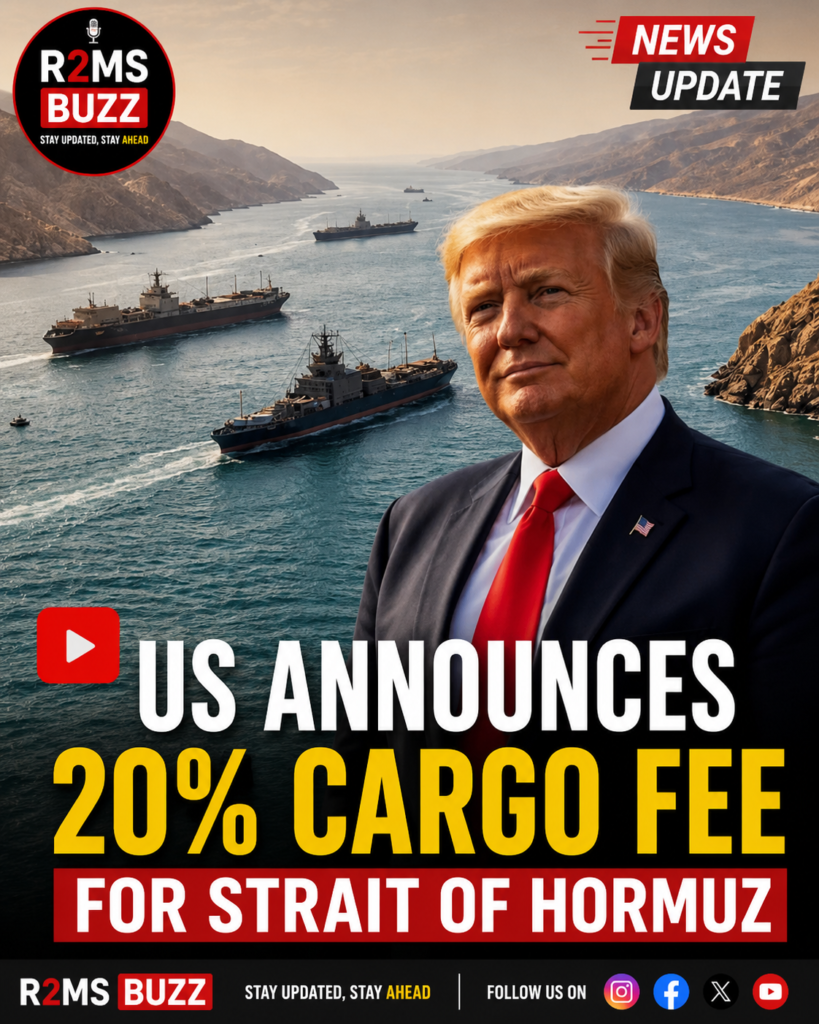
The geopolitical tensions surrounding the Strait of Hormuz, one of the world’s most critical maritime trade routes, have intensified after US President Donald Trump announced that the United States plans to impose a 20% charge on all cargo transported through the strategic waterway. Describing the US as the future “Guardian of the Hormuz Strait,” Trump said the fee would compensate America for providing security in the region.
The announcement has drawn an immediate and strong response from Iran, which rejected the proposal and warned that any attempt by the United States to interfere in the management of the Strait of Hormuz would not be accepted. Tehran also cautioned Gulf nations against cooperating with Washington, describing such actions as a serious escalation.
The latest developments come as military tensions between the United States and Iran continue to rise, raising fresh concerns over global energy security, international shipping, and stability in the Middle East.
Trump Announces New US Policy for the Strait of Hormuz
Speaking through his social media platform, Truth Social, President Donald Trump announced a major shift in US policy regarding the Strait of Hormuz.
Trump declared that the United States would become the “Guardian of the Hormuz Strait”, stating that Washington would ensure the safety and security of one of the world’s busiest shipping corridors.
According to Trump, every cargo shipment passing through the strait would be required to pay a 20% fee, which he said would cover the costs incurred by the United States in maintaining safe navigation through the volatile region.
He added that preparations to implement the policy would begin immediately.
US Says Strait Will Remain Open
In his statement, Trump emphasized that the Strait of Hormuz would remain open for international trade.
He said the United States would guarantee uninterrupted access for commercial vessels from around the world.
At the same time, Trump announced the reinstatement of what he described as an Iranian blockade, claiming that restrictions would apply only to Iranian vessels and customers linked to Iran.
According to him, commercial ships from other countries would continue to enjoy free passage through the strategic waterway.
The statement represented one of Washington’s strongest declarations regarding maritime security in the Gulf region in recent months.
Earlier Remarks on Fox News
Hours before his social media announcement, Trump discussed the Strait of Hormuz during an interview with Fox News.
During the interview, he suggested that the United States was effectively “taking over” responsibility for protecting the waterway.
He argued that because America would bear the costs of maintaining maritime security, it should receive financial compensation from international shipping using the route.
Trump also remarked that the United States might become the “guardian angel” of the strait, emphasizing its role in safeguarding one of the world’s most important energy corridors.
Iran Rejects Trump’s Proposal
Iran responded swiftly to Trump’s announcement.
A spokesperson for Iran’s Khatam Al-Anbiya military command rejected any suggestion that the United States could manage or control the Strait of Hormuz.
The spokesperson said Iran would not permit foreign interference in the administration of the waterway under any circumstances.
Iran also warned neighbouring Gulf countries that cooperation with the United States regarding management of the strait would be viewed as a serious hostile act.
The strong response highlighted the growing tensions between Tehran and Washington.
Iran Declares Passage Unfeasible
Adding to the uncertainty, Iran’s Persian Gulf Strait Authority (PGSA) issued a public statement saying that navigation through the Strait of Hormuz had become temporarily unfeasible because of recent military developments.
According to the authority, shipping applications would only be processed once security conditions improved.
The statement advised shipping companies to obtain passage authorization solely through the official Iranian system.
Although commercial shipping continued to attract global attention, uncertainty surrounding future navigation increased significantly following the announcement.
Dispute Over Legal Authority
A central issue in the dispute concerns who has the legal authority to regulate shipping through the Strait of Hormuz.
Iran argues that an interim agreement reached during previous negotiations allows it to manage vessel movement and impose passage-related regulations.
The United States and several other countries disagree with that interpretation.
Washington maintains that international law guarantees freedom of navigation through international waterways and rejects unilateral control over one of the world’s most important maritime routes.
The disagreement continues to remain one of the major legal issues surrounding the crisis.
Strategic Importance of the Strait of Hormuz
The Strait of Hormuz connects the Persian Gulf with the Gulf of Oman and the Arabian Sea.
Despite being relatively narrow, it serves as one of the world’s busiest maritime corridors.
Approximately 20 percent of global crude oil and liquefied natural gas (LNG) exports pass through the strait every day.
Major energy producers including Saudi Arabia, Iraq, Kuwait, Qatar and the United Arab Emirates rely heavily on this route for exports.
Because of its strategic location, any disruption immediately affects global energy markets.
Impact on Global Oil Markets
Financial markets closely monitor developments in the Strait of Hormuz because disruptions can quickly influence global energy prices.
If shipping becomes more expensive due to additional transit charges or security concerns, transportation costs for crude oil and natural gas could rise.
Higher transportation costs may eventually affect fuel prices worldwide.
Economists also warn that prolonged instability in the Gulf region can increase inflationary pressure by raising energy costs for industries and consumers.
As a result, governments and international organizations continue monitoring the situation carefully.
Alternative Shipping Routes
Reports indicate that the United States is exploring alternative maritime routes that could reduce dependence on areas influenced by Iran.
Developing alternative shipping corridors may improve long-term energy security, although replacing the Strait of Hormuz entirely would remain difficult because of its strategic geography.
Several Gulf countries have already invested in pipelines and export infrastructure designed to reduce reliance on the narrow waterway.
Nevertheless, the Strait continues to remain the primary route for most Gulf energy exports.
Diplomatic Efforts Continue
Despite growing military tensions, diplomatic efforts have not completely stopped.
Countries including Pakistan, Qatar, and Egypt continue engaging with both sides in an effort to reduce tensions and encourage negotiations.
Although President Trump recently suggested that previous ceasefire arrangements had effectively ended, regional mediators continue working toward a broader diplomatic settlement.
Observers believe sustained dialogue remains essential for preventing further escalation.
Why the Strait Matters to India
India has significant economic interests in the Strait of Hormuz.
A substantial portion of India’s crude oil imports originates from Gulf countries whose exports pass through the waterway.
Any disruption could affect:
- Energy imports
- Fuel prices
- Shipping costs
- Trade flows
- Inflation
Indian authorities therefore closely monitor developments affecting maritime security in the Gulf region.
Stable navigation through the Strait remains important for India’s energy security.
International Reactions Expected
Trump’s proposal is expected to generate international debate regarding maritime law, commercial shipping, and global trade.
Many governments are likely to examine the legal implications of imposing transit fees in an international waterway.
Shipping companies, insurers, and energy markets are also expected to assess the potential financial impact of the proposal.
Further diplomatic discussions may follow as countries seek clarity regarding future navigation rules.
Conclusion
President Donald Trump’s announcement of a proposed 20% cargo fee for ships using the Strait of Hormuz has added a new dimension to the already tense relationship between the United States and Iran. While Washington argues that the fee would compensate America for securing one of the world’s most important maritime trade routes, Iran has firmly rejected any foreign role in managing the strait and warned against outside interference.
Given the Strait of Hormuz’s importance to global energy supplies and international trade, the situation will continue to attract close attention from governments, businesses, and financial markets worldwide. Whether the proposal leads to further confrontation or renewed diplomatic engagement remains uncertain, but its potential impact on global shipping and energy security makes it one of the most significant geopolitical developments in the region.
FAQs
1. What did Donald Trump announce regarding the Strait of Hormuz?
He announced that the United States would impose a 20% fee on cargo transported through the Strait of Hormuz to cover maritime security costs.
2. Why is the Strait of Hormuz important?
The waterway carries approximately 20% of the world’s crude oil and LNG supplies, making it one of the world’s most important shipping routes.
3. How did Iran respond?
Iran rejected the proposal, stating that it would not allow the United States to interfere in managing the Strait of Hormuz.
4. Will all ships pay the proposed fee?
Trump said the fee would apply to cargo shipments using the strait while also stating that non-Iranian vessels would continue to have access to the waterway under the proposed US security arrangement.
5. Why does this matter globally?
Any disruption or additional cost in the Strait of Hormuz could affect international oil prices, shipping costs, and global trade.