
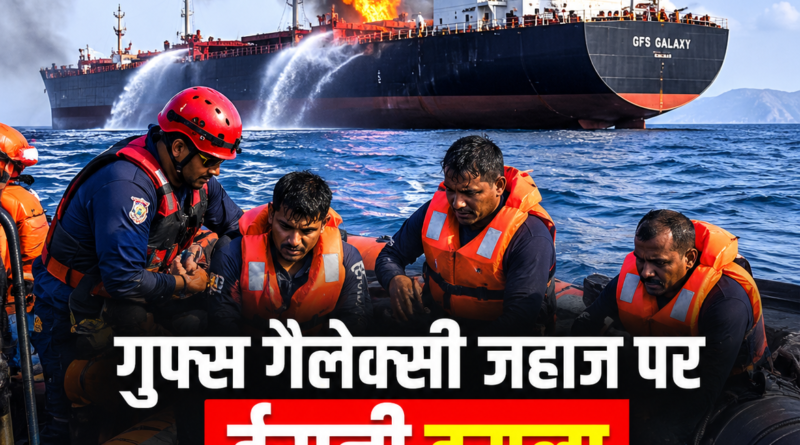
10 Indian Rescue in Hormuz Assault
The attack on the Cyprus-flagged commercial cargo vessel GFS Galaxy in the Strait of Hormuz has intensified concerns over maritime security in one of the world’s most strategically important waterways. The incident, which occurred off the coast of Oman, has also raised alarm in India after it was confirmed that 11 Indian nationals were among the crew members onboard.
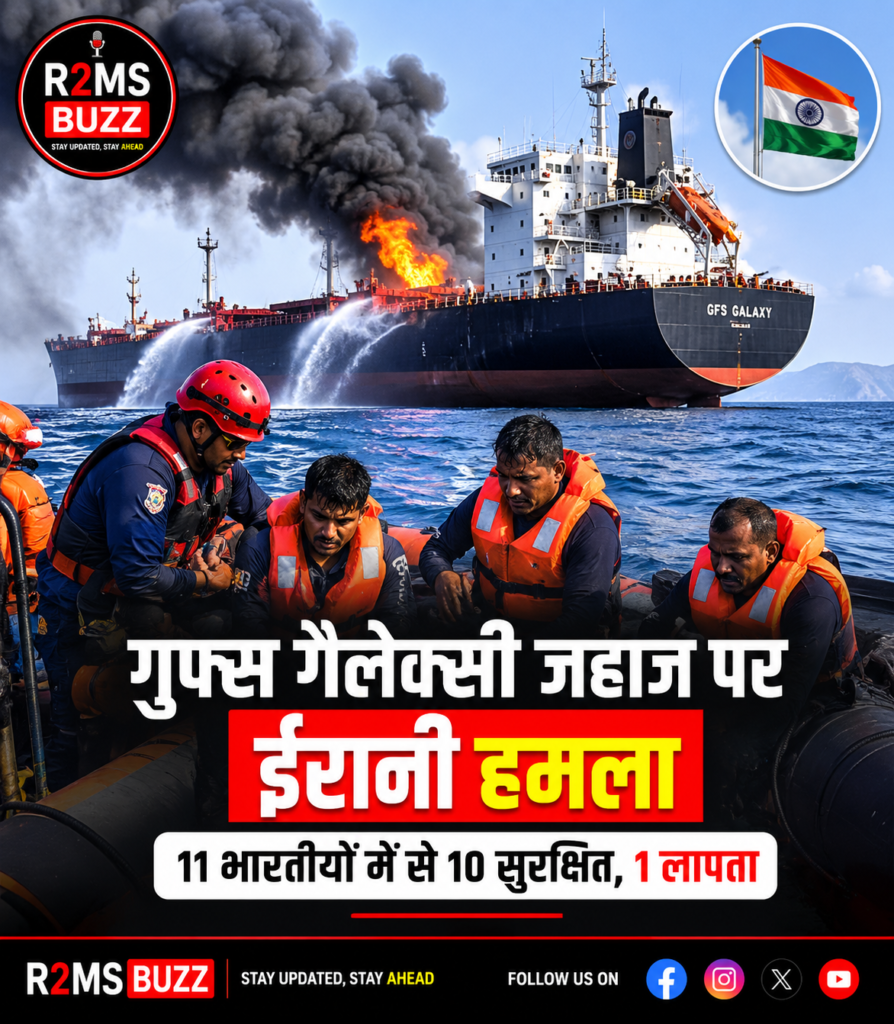
According to the Ministry of External Affairs (MEA), ten Indian crew members have been rescued safely, while one Indian sailor remains missing. The Indian Embassy in Oman is working closely with Omani authorities as search and rescue teams continue efforts to locate the missing crew member.
India has strongly condemned the attack, describing it as “deeply worrisome” and stressing that commercial vessels and civilian infrastructure must never become targets during regional conflicts. The incident comes amid escalating tensions in the Middle East, with fresh military action further increasing uncertainty across the Gulf region.
Commercial Vessel Attacked in the Strait of Hormuz
The GFS Galaxy, a Cyprus-flagged cargo ship, was navigating the Strait of Hormuz when it came under attack. The assault reportedly caused a major fire onboard, leaving parts of the vessel heavily damaged.
As the fire spread, the crew was forced to abandon the ship using emergency lifeboats. Rescue operations began shortly after distress signals were received, with maritime authorities and emergency teams responding to the incident.
Officials have not released complete technical details regarding the damage to the vessel, but initial reports indicate that the ship suffered extensive structural impact before the crew evacuated.
The incident has once again highlighted the risks facing merchant vessels operating in waters affected by geopolitical tensions.
Eleven Indians Were Onboard
Among the crew members were 11 Indian nationals, reflecting India’s significant contribution to the global maritime workforce.
The Ministry of External Affairs confirmed that ten Indian crew members have been rescued safely.
However, one Indian national remains missing, prompting an intensive search operation involving Omani authorities and maritime rescue agencies.
The identities of the rescued crew members have not been officially disclosed, while officials continue efforts to trace the missing sailor.
The Indian government has assured that it is maintaining constant communication with the affected families and monitoring every stage of the rescue operation.
Indian Embassy Coordinates Rescue Efforts
The Indian Embassy in Oman has taken an active role in coordinating rescue operations following the attack.
Diplomatic officials are working closely with Omani authorities, emergency responders, and shipping representatives to gather real-time updates.
The embassy is also providing assistance to the rescued Indian crew members and extending support to their families in India.
Officials stated that ensuring the safety and well-being of Indian citizens remains the government’s highest priority.
The embassy continues to monitor developments while assisting local authorities during the ongoing search mission.
India Strongly Condemns the Attack
Reacting to the incident, the Ministry of External Affairs issued a strong statement condemning the attack on the commercial vessel.
The government described the assault as “deeply worrisome”, emphasizing that attacks on merchant ships threaten international maritime security and put innocent civilian lives at risk.
India reiterated that commercial shipping plays a vital role in global trade and should remain protected under international norms.
Officials stressed that merchant vessels carrying civilian crews must never become targets during armed conflicts.
The government also urged all parties involved in the regional crisis to exercise restraint and avoid further escalation.
Iran’s Claim and Closure of the Strait
Following the attack, Iranian authorities reportedly stated that the vessel had been travelling through an “unauthorised route.”
Iran later announced the closure of the Strait of Hormuz, a move that significantly heightened tensions across the Gulf.
The Strait of Hormuz is considered one of the world’s most important maritime corridors because it serves as a major route for international oil and liquefied natural gas shipments.
Although commercial navigation has continued in parts of the region, the announcement has increased concerns among governments, shipping companies, and global energy markets.
Why the Strait of Hormuz Is So Important
The Strait of Hormuz connects the Persian Gulf with the Gulf of Oman and the Arabian Sea.
Every day, millions of barrels of crude oil and substantial quantities of liquefied natural gas pass through this narrow waterway.
Countries across Asia, Europe, and other parts of the world depend on uninterrupted shipping through the strait.
Any disruption can have far-reaching consequences, including:
- Higher global oil prices
- Increased shipping insurance costs
- Delays in international trade
- Supply chain disruptions
- Greater economic uncertainty
Because of its strategic importance, even isolated attacks on commercial vessels attract worldwide attention.
India Calls for Safe Navigation
India has emphasized that maintaining freedom of navigation is essential for global trade and regional stability.
In its official response, the government stated that civilian infrastructure, including merchant ships, should never be targeted.
The MEA also called for the restoration of safe maritime movement through international waterways.
Officials stressed that uninterrupted commercial shipping benefits not only regional economies but also global supply chains that millions of people depend upon every day.
India’s statement reflects its longstanding position supporting peaceful maritime commerce and adherence to international law.
Regional Conflict Continues to Escalate
The attack on the GFS Galaxy occurred amid growing military tensions across the Middle East.
Following the incident, the United States launched additional military strikes in the region, adding another layer of uncertainty to an already volatile situation.
Diplomatic efforts to reduce tensions have continued, but repeated military exchanges have complicated attempts to restore stability.
Several countries in the Gulf have also increased security measures to protect key infrastructure and monitor regional airspace and shipping routes.
International observers continue urging restraint from all sides.
Impact on Global Shipping
The latest attack has once again demonstrated how quickly geopolitical tensions can affect international commerce.
Shipping companies operating through the Gulf region are closely monitoring developments while reviewing operational risks.
Insurance providers may also reassess premiums for vessels travelling through high-risk maritime zones.
Maritime security experts note that attacks on civilian ships create uncertainty not only for shipping companies but also for importers, exporters, and energy markets worldwide.
Maintaining confidence in global trade depends heavily on ensuring that commercial vessels can navigate safely.
India’s Maritime Workforce
India remains one of the world’s leading suppliers of merchant navy professionals.
Thousands of Indian officers and sailors work aboard commercial vessels operating across international waters.
Their contribution supports global trade, energy transportation, and international logistics.
The GFS Galaxy incident has once again highlighted the risks these professionals face while performing their duties in conflict-prone regions.
The government has assured that it will continue taking every necessary step to protect Indian citizens working overseas.
Search for Missing Crew Member Continues
The immediate priority remains locating the missing Indian sailor.
Search and rescue teams continue operating in the area using available maritime resources.
Authorities have not announced how long the operation is expected to continue, but officials remain hopeful that continued efforts will produce positive results.
Indian officials are receiving regular updates from the embassy and Omani authorities regarding progress in the search.
Family members of the missing crew member continue to await further information.
Global Calls for De-escalation
Following the attack, several countries have expressed concern over the deteriorating security situation in the Gulf.
Governments and international organizations have emphasized the importance of avoiding further military escalation while protecting civilian lives and international shipping.
Experts believe restoring diplomatic dialogue remains essential to reducing risks in one of the world’s busiest maritime corridors.
For countries dependent on global trade, ensuring safe navigation through the Strait of Hormuz remains an international priority.
Conclusion
The attack on the GFS Galaxy has become another stark reminder of how regional conflicts can quickly affect global commerce and civilian lives. While the rescue of ten Indian crew members has provided relief, the search for the missing sailor continues as authorities work around the clock.
India’s strong condemnation of the attack and its call for the protection of commercial shipping underline the importance of safeguarding international waterways from violence. As tensions continue to rise in the Middle East, the international community faces growing pressure to restore stability, protect maritime trade routes, and prevent further escalation.